Join the Salon to take part in the 100 day experiment: https://kristine.substack.com/subscribe
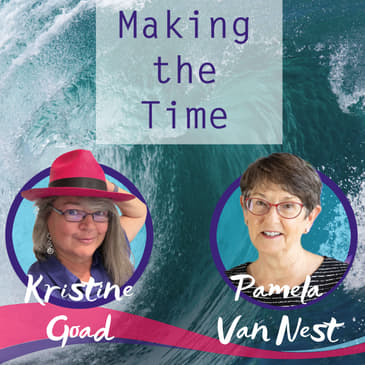
In this episode of Surfing Your Edge, Kristine Goad sits down with retired educator, coach, and creator Pam to explore what it means to keep growing, experimenting, and creating at every stage of life. Pam shares how her experiences with teaching, coaching, self-compassion, podcasting, and entrepreneurship have unfolded one small step at a time — often without a clear roadmap.
Together, they talk about the courage to try new things, the challenge of putting your work into the world when no one seems to be responding, and why self-care is an active expression of self-compassion. Pam also reflects on curiosity, aging, finding purpose beyond retirement, and the importance of making the most of the moment you’re in.
Highlights:
Pam encourages people to explore what they love, what they wonder about, and what they are good at, while remembering to appreciate the moment they are in.
- Growth doesn’t stop with age or retirement
- Big changes often happen one small step at a time
- Self-care is an expression of self-compassion
- Curiosity and presence can help guide your next chapter
- Creating and sharing your work requires persistence
About Pam Van Nest:
Pam Van Nest, a Self-Care Coach with PVN Coaching, helps women over 40 face the inner voices of perfectionism, self-doubt and second guessing to reconnect with what matters and make meaningful choices about their next chapter. With 38 years of experience as a teacher and instructional coach across Maine, Honduras, and Ontario, she is a certified CTI and ICF coach. She created the oracle card deck Making The Time and hosts the Making the Time podcast. Creative moments find her sewing, kayaking, sketching, painting, and biking.
She respectfully acknowledges that she lives on the territory of the Michi Saagiig, and the ancestral lands of the Anishinaabeg and the traditional territory covered by the Williams' Treaties. She is aware of the privileges of being a cis gender, able bodied, white woman and continues to work to decolonize her practice, staying open to new learning, and sharing her gifts.
Connect with Pamela Van Nest:
Website: https://www.pvncoaching.com
LinkedIn: https://www.linkedin.com/in/pamelavannestempowermentcoach/
Instagram: https://www.instagram.com/pvncoaching/
Facebook: https://www.facebook.com/pamela.vannest/
Pamela’s Gift for you:
Heart Meditation: 3 minutes to relax your body, quiet your mind, and expand your heart any time you need a reset.
Claim Your Gift: https://www.dropbox.com/scl/fi/sqrmbri1dzgr2dr3h693y/heart-meditation.mp3?rlkey=25aoo2t09076zh7jkc5i4gf1k&dl=0
Visit our GIFT VAULT - updated weekly for more gifts from other guests on this podcast and other podcasts in our network.
https://network.inspiredspeakernetwork.com/vault
About the Host:
Kristine Goad is endlessly curious about the moment when “I could never” becomes “What if I tried?” As the Surfing Your Edge Coach, she helps people transform their relationship with fear, trust themselves more deeply, and create lives that feel bigger, bolder, and more fully their own. Her approach blends coaching, adventure, experimentation, and wonder—shaped by experiences that include participating in the largest cross-country bicycle event in U.S. history, writing a memoir, building a business, and taking surf lessons to face her fear of open water in her late 40s. She is less interested in fearless living than in what becomes possible when we get curious about the things that scare us.
Connect with Kristine:
Join me for a Possibility Party: https://calendar.app.google/DsMvD6Atvdprf49U9
Substack: https://kristine.substack.com
Website: https://kristinegoad.com
Facebook: https://www.facebook.com/kristinegoad
YouTube: https://www.youtube.com/@KristineGoad
LinkedIn: https://www.linkedin.com/in/kristinegoad
Instagram: https://www.instagram.com/kristine.goad
Kristine’s gift for you:
Surf Your Edge: From Fear to Freedom
This complete chapter from Confident You: The Raw Conversations traces two adventures, twenty years apart, and explores fear, identity, and why the real work of a life-changing experience begins after you come home.
Claim your gift: https://tinyurl.com/SYEgift
The Surfing Your Edge Podcast is proud to be on the Inspired Speaker Network.
⭐⭐⭐⭐⭐ Don’t forget to follow, rate & review. It helps us reach more people who want to create positive change in the world, like you.
Check out More Shows from the Network at https://inspiredspeakernetwork.com
Music from #Uppbeat
https://uppbeat.io/t/dan-phillipson/moments
License code: 5YJ8DYBGGEBGSXMY
Music from #Uppbeat
https://uppbeat.io/t/kurtz-martin/a-better-world
License code: 68OSWEGXI8YJBDMR
Your travels have brought you to the Surfing Your Edge podcast,
Speaker:where we explore what it takes to create the bigger,
Speaker:bolder, badass life you know you were born for.
Speaker:Not a life that simply looks good on paper,
Speaker:and not another spin on the self-help hamster wheel.
Speaker:If you're ready for more joy, more peace, and more contribution,
Speaker:you're in the right place.
Speaker:I'm Kristine Goad, the Surfing Your Edge coach.
Speaker:Let's get surfing.
Speaker:I am so excited to be here today with you, Pam.
Speaker:We've been in a group together for about a year,
Speaker:but we've had very little one-on-one interaction.
Speaker:So this is going to be a treat to get to talk to you
Speaker:and learn more about you and your life.
Speaker:Thank you for being here.
Speaker:Thanks, Kristine.
Speaker:Yeah, I feel that way too.
Speaker:The longer we're in a group and you share different things,
Speaker:I identify so much about your struggles with being in business mostly.
Speaker:So yeah, I'm glad to share this with you.
Speaker:I'm glad to have you here.
Speaker:So why don't we just pretend that the audience is getting to know you
Speaker:at the same time that I'm getting to know you,
Speaker:and if you could just tell me a little bit about yourself and your journey.
Speaker:Okay.
Speaker:Well, right now I'm in Peterborough, Ontario,
Speaker:and I've been here for 37 years.
Speaker:So next year I will be here 38 years,
Speaker:so I can say I have spent half of my life in Canada
Speaker:and half of my life in Maine, so you can do the math.
Speaker:And yeah, so I'm retired.
Speaker:I'm a retired teacher, and I spent 38 years in education,
Speaker:and I sort of start there and go backwards.
Speaker:I was a special ed teacher for 25 years because my brother,
Speaker:he was third in the family, he was born with Down syndrome.
Speaker:And way back in the 50s and 60s,
Speaker:parents were encouraged to send them to the institution in Maine.
Speaker:It was called Pineland.
Speaker:And so he lived there from age six until 13 when he suddenly died.
Speaker:He had rheumatic fever.
Speaker:Yeah, and I don't know whether they told my parents that he had been ill,
Speaker:but the effects of that, his heart just stopped at 13.
Speaker:I was 16, 17 at the time,
Speaker:and I had known sort of what I wanted to do,
Speaker:but I knew then I wanted to be a special ed teacher.
Speaker:So his life, you know, it crafted who I was, and I loved it.
Speaker:I just loved it.
Speaker:I was a special ed teacher, and for 16 years,
Speaker:I taught in the state of Maine, in Norway, Maine.
Speaker:And in the meantime of that in my life,
Speaker:by the time I was about 35, I was married and divorced twice.
Speaker:So my life had a lot of upheaval, but my job remained the same.
Speaker:It stayed the same.
Speaker:It was like a firm post in my life.
Speaker:So after I went through that and began to get some perspective,
Speaker:I learned, because in my family, I don't know, it is relevant.
Speaker:I grew up in a home with alcoholism.
Speaker:My mom had the disease, and so that impacted a lot.
Speaker:But luckily I was able to find a group and a fellowship
Speaker:where I began to heal and grow.
Speaker:And so in the meantime, I met my third husband,
Speaker:and he was from Canada.
Speaker:We had a long-distance relationship for a number of years,
Speaker:and then I moved with my young 13, 14-year-old daughter
Speaker:and have been here ever since.
Speaker:And so I can carry on the special ed, teaching special ed,
Speaker:and then I had other opportunities in teaching.
Speaker:And then after I retired, became a coach.
Speaker:I love that.
Speaker:Yeah.
Speaker:I'm realizing, oh, God, I'm the age I am.
Speaker:There's more and more and more.
Speaker:Yes.
Speaker:Isn't that incredible?
Speaker:I think the generation that came before us was led to believe that
Speaker:after retirement there was very little left, right?
Speaker:And we're finding the exact opposite.
Speaker:I am so inspired by the women I know in their 60s, 70s, 80s,
Speaker:who are still building something of their own and going with just gusto
Speaker:and fire, and I love that.
Speaker:Thanks.
Speaker:Yeah, because sometimes it feels like it's a smoldering fire.
Speaker:Yeah, and I think that's probably true at any age.
Speaker:Maybe as we get – well, I can't say maybe.
Speaker:I know that as my body is aging and the chemistry in my brain is changing,
Speaker:things are changing.
Speaker:I do things slower.
Speaker:I forget more.
Speaker:So I know it does get harder.
Speaker:But if we're still on this planet, there's a reason, right?
Speaker:We've still got more to do and more to learn and more to be.
Speaker:Yeah, yeah, more to learn.
Speaker:There's always more to learn.
Speaker:I used to feel that way when I was a teacher.
Speaker:There's always more to learn.
Speaker:And now even at my age, it's still so many things.
Speaker:As I try new things, oh, I have to learn new things to go with it
Speaker:in order to do it.
Speaker:So I like it.
Speaker:Wonderful.
Speaker:It sounds like you've surfed many, many edges in your life.
Speaker:Is there one in particular that you feel really changed who you are
Speaker:or how you show up in the world?
Speaker:I think the soft one was finding a group that could help me learn the 12 steps.
Speaker:And then that really changed a lot, changed my perspective.
Speaker:It healed a lot so that I could be more of who I was meant to be
Speaker:and learning how I was and how it didn't work.
Speaker:So that was a huge one.
Speaker:But it just doesn't feel like a big one.
Speaker:It was just one foot in front of the other.
Speaker:And one of the things coming to Canada, I was also able to find a similar group
Speaker:to be in.
Speaker:Yeah, it's just one foot in front of the other.
Speaker:It wasn't like, you know, I love that imagery that you have of the surfing.
Speaker:Now, I've never surfed, but I've seen surfers carrying their surfboard.
Speaker:It wasn't like plunging in and doing it.
Speaker:It was just continuing on.
Speaker:So I think a big one was coming to Canada
Speaker:because it meant changing my daughter's location.
Speaker:But I was getting a new job.
Speaker:For 16 years, I taught at the same school district in the same school,
Speaker:and I started a new program in special ed in Canada when I came.
Speaker:And so there were a lot of waves too.
Speaker:It was a ride when I came to Canada.
Speaker:And then also go through the grieving process of leaving home, leaving Maine.
Speaker:It was a wonderful move.
Speaker:I do not regret it at all, but there was that grief of, you know,
Speaker:we didn't have the same friends in the same location.
Speaker:So that was a big one, and it did change
Speaker:because I was doing a little bit different type of teaching,
Speaker:sort of the same but different with different age group of students.
Speaker:And so I had to adapt to that.
Speaker:And then helping my daughter, who really wasn't that keen on it.
Speaker:So, you know, surfing that age.
Speaker:Being a mother, oh, my God, that's a huge wave.
Speaker:Yeah.
Speaker:Yeah.
Speaker:And that was in years pre-Zoom,
Speaker:when the connections you had with people back home,
Speaker:now you're doing international calls.
Speaker:And back in the day, you were probably paying by the minute.
Speaker:I forgot about that.
Speaker:With friends and family that you were missing,
Speaker:and it was a different world.
Speaker:I think moving then would be much harder than moving now.
Speaker:Yeah.
Speaker:Yeah.
Speaker:A lot of phone calls.
Speaker:Yeah, you're right.
Speaker:Staying in that connection.
Speaker:Yeah.
Speaker:That's true.
Speaker:That's true.
Speaker:And then traveling back, we went back four times a year to visit.
Speaker:Oh, wow.
Speaker:Nice.
Speaker:Yeah.
Speaker:Yeah.
Speaker:So I have a strong connection, but not a strong connection anymore.
Speaker:You know, I'm glad.
Speaker:I always say all the experiences of my life have brought me to this moment.
Speaker:So, you know, being born in the United States, being raised in the state of Maine,
Speaker:I am so grateful because it's part of who I am and how I see things now.
Speaker:Absolutely.
Speaker:Yeah.
Speaker:And I love what you said about it never feeling like a giant decision.
Speaker:I mean, I know that moving to Canada was a giant decision,
Speaker:but that for the most part,
Speaker:you put one foot in front of the other and just find your path along the way.
Speaker:And I love that.
Speaker:I've noticed in the year that I've known you,
Speaker:that that's exactly what you're doing in your business.
Speaker:So can you tell me a little bit about the business you're building?
Speaker:It's a coaching business.
Speaker:I became acquainted with coaching through my teaching job, actually,
Speaker:where we were hired to be instructional coaches.
Speaker:It was a brand new thing.
Speaker:And this was back in, I've been retired 15 years, so it's almost 20 years ago.
Speaker:It was something new and surfing that edge.
Speaker:And, you know, I found it challenging, but also sort of rewarding.
Speaker:But I also learned that I was doing a type of coaching called coaching for compliance.
Speaker:And then what I do now is coaching for compassion.
Speaker:And I went to distinction.
Speaker:I thought, no wonder it was so difficult.
Speaker:Because when you coach for compliance, you might get resistance.
Speaker:And I found there was a lot of resistance.
Speaker:Those teachers thought what they were doing was effective.
Speaker:And our mandate was to help people change their methodology.
Speaker:And so that was, you know, like hurricane waves in some way.
Speaker:So anyway, I learned about coaching.
Speaker:I began to take courses.
Speaker:And that's when I learned the distinction between the two.
Speaker:So when I retired, I thought, oh, I was able to hire a coach.
Speaker:And I realized the power of that.
Speaker:And I thought, I like this.
Speaker:I want to learn more about it.
Speaker:So when I retired, I decided I did not want to get to be 70 years old
Speaker:and look back and say, gee, I wish I had been certified.
Speaker:So I looked it up.
Speaker:And I did the six-month course and became certified through CTI.
Speaker:And then, you know, I was thinking of this beforehand.
Speaker:It was sort of like I felt like I was pulled by the tide doing this coaching,
Speaker:learning how to do it.
Speaker:And they said, well, now you have a business.
Speaker:I do.
Speaker:Okay.
Speaker:So this is what you have to do.
Speaker:So I did.
Speaker:Now, I've done this since 2013.
Speaker:And some people would say, Pam, you don't have a business.
Speaker:You have a hobby.
Speaker:Okay.
Speaker:But I really loved the connection I was making with mostly women but some men,
Speaker:the change that they had within themselves just by me asking questions.
Speaker:Yes.
Speaker:So I have, you know, I've tried all kinds of things.
Speaker:And my latest thing that I have done was the last couple of years trying to make
Speaker:all the information I've learned.
Speaker:And my focus was on self-compassion because I realized that's what I was hearing
Speaker:that was missing from most of the people I was coaching.
Speaker:They were pretty hard on themselves.
Speaker:I thought, how can I make this into a game?
Speaker:So I began playing with making games.
Speaker:And then I heard about the course, Marcy's course in making cards, card deck.
Speaker:And I've used card decks.
Speaker:I thought maybe I can use my experience.
Speaker:So I created this card deck, and I call it an Oracle deck of making the time.
Speaker:And it's all about self-care.
Speaker:And so that's where I'm at now.
Speaker:And it's like one tiny step after another, getting it into shops
Speaker:and beginning to do workshops and that kind of thing.
Speaker:But the coaching, I love the coaching because of the change I see in them.
Speaker:And any time I get off a call coaching someone,
Speaker:I feel more alive than I did when I started.
Speaker:Yeah, I agree with you.
Speaker:Yeah.
Speaker:Anyway.
Speaker:And so I love it.
Speaker:You're like, well, let's get certified.
Speaker:Okay, now you have a business and you're coaching clients.
Speaker:Okay.
Speaker:And it's like, okay, now I recognize that I have a body of work that I want to share.
Speaker:So let's create a card deck.
Speaker:Okay.
Speaker:Now, how am I going to market this card deck?
Speaker:And so you want to tell me a little bit about the choices you've made about how to market?
Speaker:Yeah, the marketing.
Speaker:Marketing has parts of me that are quite hard on myself.
Speaker:I go back to I'm a teacher, a businesswoman.
Speaker:Okay, but now I'm a businesswoman.
Speaker:Okay.
Speaker:So in marketing, I have, well, I've tried Facebook.
Speaker:I've done Facebook lives where I will choose decks one day a week, choose cards one day a week.
Speaker:And then on Friday, I would do a Facebook live and just put it all together.
Speaker:Because that's the whole point of using the four cards.
Speaker:Where does it take you?
Speaker:I don't tell anybody.
Speaker:My self-care deck is not a prescribed recipe into your self-care.
Speaker:But I'm giving you loving kindness statements and action words to stimulate that within you.
Speaker:So I've done a little bit of speaking.
Speaker:And that was before the cards.
Speaker:So it's just, I guess it's like a hit or miss.
Speaker:You know, I just keep swinging.
Speaker:So I keep taking courses and I keep taking out vendor tables.
Speaker:So yeah, that's the way I'm doing it.
Speaker:And you're forgetting a giant piece, which I tend to forget too.
Speaker:You started a podcast.
Speaker:Oh, yes.
Speaker:And I started a podcast.
Speaker:And what is the name of your podcast?
Speaker:And who do you have on as guests?
Speaker:Okay, so it's called Making the Time, which is the name of the deck.
Speaker:And I realized that I had these 14 areas of self-care.
Speaker:And I thought, hey, I could get someone that knows something about each of those areas.
Speaker:And just ask them questions about how do you take care of yourself?
Speaker:What do you think self-care is?
Speaker:And how does it relate to this area?
Speaker:And how does it relate to all the other areas in your life?
Speaker:Because that's one of the things.
Speaker:Each one of these cards, you know, because it goes physical, mental, emotional, spiritual, relational, financial, creative, workspace, and there are others.
Speaker:When you work on one, you actually impact many of the others.
Speaker:It's like that spider web kind of thing.
Speaker:So I have just thought of people I knew.
Speaker:And I had you on to talk about the category of the inner child, because it's all part of our self-care.
Speaker:And it's mostly people that I just know that will be able to talk a little bit about that and guide the listeners into thinking for themselves.
Speaker:What does that area mean to them?
Speaker:But you didn't know how to create a podcast, right?
Speaker:It just came up and then you're like, oh, how do I do this?
Speaker:And you just put one foot in front of the other and created a podcast.
Speaker:It was just like an overnight thing.
Speaker:It's just like, oh, yeah, I just created a podcast.
Speaker:I just started inviting women to talk to me about my card deck.
Speaker:And it was just phenomenal to watch.
Speaker:It was just, you are definitely building your own path, right?
Speaker:You are discovering your path and creating your own unique path.
Speaker:You're not following anyone else's formula.
Speaker:You're learning what other people have to offer.
Speaker:But you're really making your own decisions and just taking a step and looking around and then deciding, okay, this is the next step.
Speaker:And this makes sense, right?
Speaker:And are you building a business?
Speaker:I think I know the answer to this.
Speaker:But let me just ask, are you building a business that really does feel like you're letting yourself become more of who you were meant to be?
Speaker:I think so, because I'm doing things that are uncomfortable.
Speaker:And if I weren't doing this, what would I be?
Speaker:I asked myself, what would I be doing?
Speaker:I might volunteer more, which is gratifying also.
Speaker:But it does push me to get out of that, to get out of the mindset of, oh, this isn't working, nobody's listening.
Speaker:Because that's a very, I've always had a strong, negative self-talk.
Speaker:And I have to work on that.
Speaker:Thus, I have in my coverage, one of the suits are the internal obstacles.
Speaker:Because I have to, they're with me all the time and learning how to befriend them and learn from them.
Speaker:And the person I learned how to do the podcast from was my granddaughter.
Speaker:Really?
Speaker:I did.
Speaker:Because she started a podcast.
Speaker:And I have to back this up and realize the one foot in front of the other.
Speaker:Way back in 2013, when I first became a coach, we had, there is such a thing called International Coaches Week.
Speaker:And I thought at the time, hey, the people that really helped me become a coach, I want to interview them.
Speaker:There were two or three of them.
Speaker:And so I did.
Speaker:And nothing became of it.
Speaker:But then years later, I found a notebook.
Speaker:And I had lists of people when I do my podcast.
Speaker:So this has been, I guess, a work in progress.
Speaker:But anyway, my granddaughter was talking about doing a podcast.
Speaker:And she talked about what software she used.
Speaker:So I thought, I'll try that.
Speaker:So I did.
Speaker:But you're right, the learning curve was, how do you do this?
Speaker:And what do you do that?
Speaker:And I like to fiddle.
Speaker:I like to take things apart, put things back together again.
Speaker:And that's what I did.
Speaker:But now I have my system.
Speaker:I know step one, step two.
Speaker:Okay, now I go here.
Speaker:Now I go there.
Speaker:I love it.
Speaker:Well, it is a little machine, right?
Speaker:You have to, like, keep feeding this little monster.
Speaker:Needs new content.
Speaker:And then the content needs to be shared.
Speaker:And then you need to go find new guests.
Speaker:It's just never-ending.
Speaker:So it needs to be something you enjoy.
Speaker:And that's what I discovered was I really enjoyed, whether anybody listened or not, I really enjoyed sitting.
Speaker:Like we are now, even though it's on Zoom, talking to that person.
Speaker:And just, you know, I do have questions ahead of time.
Speaker:Partly for me, so I don't forget.
Speaker:But I always feel like it gives people a chance to think ahead.
Speaker:But it's just, I get to know that interviewee a little bit better.
Speaker:I knew of them.
Speaker:And so I really enjoy that part of it for myself.
Speaker:Which is kind of selfish.
Speaker:But it's like, I do have some people that they do listen to it.
Speaker:I have a good friend from university.
Speaker:She said, I'm really enjoying your podcast.
Speaker:Which made me think, oh, good, I'll keep doing it.
Speaker:Yes.
Speaker:Yeah, that is one of the things I've realized about being a creator this summer in particular.
Speaker:I'm trying to grow my sub stack and launch this podcast kind of at the same time.
Speaker:And I put out an article on sub stack the other day.
Speaker:And it felt so foundational to me.
Speaker:It was like, my sub stack is called wishing you wonder.
Speaker:And the article was why I wish you wonder.
Speaker:And what that means for me.
Speaker:And so it felt really, really important.
Speaker:And I sent it out to my email list.
Speaker:And not a single person opened it the first day.
Speaker:And I was like, oh!
Speaker:And then I put it out a couple of different ways.
Speaker:And sent people to it other ways.
Speaker:And now I'm getting a little bit of feedback.
Speaker:But it was like, when?
Speaker:This is going to sound morbid.
Speaker:But I recently lost another friend.
Speaker:I've lost too many friends.
Speaker:I lost three friends before the age of 50.
Speaker:And I just lost another friend before the age of 60.
Speaker:And when I wrote that article and put it out there.
Speaker:I was thinking, well, thank God I got that done before I die.
Speaker:And I'm like, where did that thought come from?
Speaker:So it was kind of a shock.
Speaker:But it was also true.
Speaker:This felt like a really important piece.
Speaker:And to put it out there and then you just kind of sit and wait.
Speaker:And hope somebody finds it and reads it and says something.
Speaker:That's really hard.
Speaker:And when you're doing that on multiple fronts.
Speaker:Or even if you're doing it on just one front.
Speaker:And you're running a solo business.
Speaker:It is really hard to just keep putting yourself out there.
Speaker:And hoping that somebody will notice it.
Speaker:And even if they never say anything.
Speaker:Will benefit or enjoy it in some way.
Speaker:Yeah.
Speaker:And it's like I echo just what you just said.
Speaker:And I'm also realizing.
Speaker:Because I read your article and I thought, oh, yeah.
Speaker:Why you wish us wonder.
Speaker:Because that's where life is, is in the wonder.
Speaker:And I've had some of those same feelings about.
Speaker:I feel as though I just have this empty closet.
Speaker:And I'm putting, if I did my Facebook stuff out.
Speaker:But sometimes I'd be in a networking event.
Speaker:Or I'd be somewhere and someone would say, oh, Pam.
Speaker:I saw your post the other day.
Speaker:I really enjoy them.
Speaker:They come up on my feed.
Speaker:Oh, okay.
Speaker:Well, thank you.
Speaker:And once again, okay, I'll keep doing it.
Speaker:And I've heard that from a couple people.
Speaker:But nobody comments.
Speaker:Nobody even likes them.
Speaker:And it's like, oh, well, I learned something.
Speaker:Right.
Speaker:But it's also, and I lost my train of thought there.
Speaker:Now it's knowing that there are people out there.
Speaker:They're watching it.
Speaker:They might like it a lot.
Speaker:They might hate it.
Speaker:But they might like it a lot.
Speaker:So I just keep doing it.
Speaker:Because if one person can gain some insight for themselves,
Speaker:then it's worth it.
Speaker:So I know just what you mean.
Speaker:And so now I found this too with emails and with texts.
Speaker:I would sometimes get an email from someone I was on a committee with,
Speaker:FYI, but she would feel frustrated because nobody responded.
Speaker:So got your email, sounds good.
Speaker:And so if somebody sends a networking thing and I know the person,
Speaker:they have this thing coming up, I'll read it.
Speaker:I can't do it.
Speaker:But now I'm trying to get in the practice of emailing them back and saying,
Speaker:this sounds fabulous.
Speaker:I can't do it.
Speaker:Good luck with it.
Speaker:You know, that touchstone.
Speaker:Yes.
Speaker:So I'm learning from, and it's never,
Speaker:I don't think it's ever malicious with people just don't write back.
Speaker:But it's like now I'm learning, Oh,
Speaker:I would love it if somebody said thanks for this.
Speaker:I can't do it.
Speaker:Right.
Speaker:You're absolutely right.
Speaker:I have a client.
Speaker:I tend to attract neurodivergent clients in particular.
Speaker:I'm not even quite sure how I do it.
Speaker:I don't put it in my marketing anywhere, but they just find me.
Speaker:And I have one and she puts out a monthly newsletter for an organization.
Speaker:She's on the board of,
Speaker:and she spends hours creating these newsletters and they go out to crickets
Speaker:and it just breaks her heart.
Speaker:Right.
Speaker:So I think you're absolutely right.
Speaker:We get so in the mode of, Oh, saw that.
Speaker:Can't do it.
Speaker:You know, click it off and we're just moving on.
Speaker:And we need to remember that it's relational.
Speaker:And there is somebody on the other end who really would appreciate.
Speaker:I saw that.
Speaker:I saw your work.
Speaker:I appreciate you.
Speaker:Thank you for what you do to bring us together.
Speaker:Yeah.
Speaker:Yeah.
Speaker:And it is like that.
Speaker:I always call self-compassion and self-care, like a ripple effect.
Speaker:It's those ripples go out, but when they hit the shore, you know,
Speaker:they come back in to having been in a kayak.
Speaker:Yes.
Speaker:And dealt with the ones coming straight on, but then further.
Speaker:There's a great analogy in there, isn't there?
Speaker:Exactly.
Speaker:So it's, yeah, that ripple effect.
Speaker:And of course they'll, you know, why, why do I want to do this?
Speaker:Because self-care to me is an expression of self-compassion.
Speaker:What I've learned is that it's not a very business savvy term.
Speaker:People have said to me all along, don't lead with that.
Speaker:Don't.
Speaker:And I'm going, why not?
Speaker:We need it.
Speaker:And so now I'm seeing, you know,
Speaker:the mainstream more and more about self-care.
Speaker:But my thinking is when we, and I think they've shown this in science,
Speaker:when we take care of ourselves, well,
Speaker:we have more capacity to then take care of others.
Speaker:And when someone else receives that care,
Speaker:then they have that opportunity to take care of themselves and pass it on.
Speaker:So that's my hope.
Speaker:I keep thinking of the airlines with the oxygen mask.
Speaker:You cannot help the person beside you if you can't breathe.
Speaker:So that's, and it's sort of like very nebulous kind of thing, you know,
Speaker:but if somebody can be a little bit kinder to themselves,
Speaker:perhaps they'll be a little kinder to the people they live with or work with.
Speaker:Plus the people you live and work with will see you taking care of yourself
Speaker:and see you as an example and learn, right?
Speaker:You have young grandchildren.
Speaker:Great grandchildren.
Speaker:Who are going to need to know these skills and know that they're worth it.
Speaker:Right.
Speaker:I think,
Speaker:I think that's the hardest thing for women to recognize is that their worth
Speaker:is not in just what they do, but,
Speaker:but in who they're being and taking care of yourself.
Speaker:I loved what you said about self-care being an expression of self-compassion
Speaker:and action and active expression of self-compassion.
Speaker:I think that's beautiful.
Speaker:And we just don't give ourselves the time or feel like we're worth it.
Speaker:Or when you had me on your podcast and you asked me, what is self-care?
Speaker:I don't know.
Speaker:I don't think I do it.
Speaker:You know, for me, it's play.
Speaker:I think that's the biggest way I take care of myself is to play.
Speaker:But so I just think it's,
Speaker:I think it's a way of being in the world and other people need to,
Speaker:will benefit from you taking care of yourself,
Speaker:but will also need to see an example of how to do it.
Speaker:Yeah.
Speaker:Yeah.
Speaker:And I've been thinking about this whole idea of being and doing,
Speaker:because in coaching, it's a big foundational piece.
Speaker:And we cannot be either or.
Speaker:To me, it has to be both.
Speaker:If we overdo the do, I get sick.
Speaker:If I overdo the being, I get inertia.
Speaker:You know, that being, I can be calm and content and sit in my backyard
Speaker:and being appreciative, you know, which gives me energy,
Speaker:but being at some point, I just kind of go.
Speaker:So for me, anyway, it's like, it's like that yin and yang.
Speaker:It's like it has to blend.
Speaker:So I have to think to myself,
Speaker:who and how am I being when I have to be doing whatever it is I'm doing?
Speaker:And that's that conscious present moment awareness.
Speaker:Yeah.
Speaker:And then sometimes it's, you know, speaking.
Speaker:I usually am quite nervous.
Speaker:And if I can recognize that and call myself out for it in that moment,
Speaker:I can continue doing the talk or whatever.
Speaker:Yeah.
Speaker:You're dropping little gems all through this conversation.
Speaker:So thank you for that.
Speaker:I love that.
Speaker:Do you have the cards nearby?
Speaker:I do.
Speaker:I always have them in front of my computer.
Speaker:I was going to say, I bet you do.
Speaker:Would you like to pull a card for the audience?
Speaker:Sure.
Speaker:Now I have, I'm going to let you decide.
Speaker:Because I have from my own organization, I have them in their, the suits.
Speaker:Okay.
Speaker:So do we need wisdom?
Speaker:Oh, I do this sometimes when I'm out in a vendor table, just to gauge people.
Speaker:Would you like a wisdom card or an action card today?
Speaker:How?
Speaker:Because the internal obstacle, we always go to that.
Speaker:So we do wait on that one.
Speaker:So would you like a wisdom card or an action card?
Speaker:And then we'll pull a self-care card and see where it matches.
Speaker:Let's do action.
Speaker:Okay.
Speaker:Action.
Speaker:All right.
Speaker:So here they are.
Speaker:Oh, they got split up here.
Speaker:There we go.
Speaker:All right.
Speaker:So I'm going to shuffle them up here.
Speaker:Oh, my God.
Speaker:Who shuffled these cards on me?
Speaker:Okay.
Speaker:So, all right.
Speaker:Oh, now there are 14.
Speaker:Give me a number from one to 14.
Speaker:Seven.
Speaker:One, two, three, four, five, six, seven.
Speaker:It says admit.
Speaker:All right.
Speaker:Now I have to hold it here because I'm blurred here, but I'll read it to you.
Speaker:Admit.
Speaker:I admit the truth to myself with gentleness and integrity.
Speaker:So let's see which self-care category we could apply that to.
Speaker:And this is how I would use it if I were working with someone.
Speaker:Particularly if they came to coaching and said, what do you want coaching on?
Speaker:I'm not sure.
Speaker:Because I was that person.
Speaker:Because it wasn't, I'm not sure.
Speaker:Oh, I don't want to be wrong.
Speaker:Yeah.
Speaker:Yeah.
Speaker:Might be the wrong one.
Speaker:So, number from one to 14.
Speaker:Three.
Speaker:One, two, three.
Speaker:Ah, isn't that interesting?
Speaker:My inner child.
Speaker:Oh, that's so funny.
Speaker:Isn't that funny?
Speaker:Because that's the topic you talked about when we were on the podcast,
Speaker:which is going to go out next week, next Wednesday.
Speaker:So, okay.
Speaker:So, admit.
Speaker:I admit the truth to myself with gentleness and integrity.
Speaker:What needs, or what does your inner child want to admit the truth about?
Speaker:Here's another way to do it.
Speaker:And just let that, or what do you need to admit about your inner child?
Speaker:So, yeah.
Speaker:And to do it with gentleness and integrity.
Speaker:Yes.
Speaker:Not gentleness.
Speaker:That might mean doing it slow.
Speaker:Right?
Speaker:Not just dumping something out there.
Speaker:Exactly.
Speaker:And I love the way you just considered that.
Speaker:And I find that even when, you know, I'm doing this with the public,
Speaker:and they will just kind of look at it and go, oh.
Speaker:Because, and I reminded one woman, we were taught in coaching that you can ask questions,
Speaker:and sometimes those questions will land, and sometimes it will seem as though
Speaker:the person looks at you like a deer in the headlight.
Speaker:And the leader said to us, don't worry about it.
Speaker:Go on to the next question.
Speaker:Because that question they couldn't answer, or they had to really pause on,
Speaker:will work on them, and it will come back to them later on in hours to come in a day.
Speaker:Yeah.
Speaker:Yeah.
Speaker:I love that.
Speaker:So, if you were speaking with someone who is just learning
Speaker:how to experiment with surfing their edge,
Speaker:they've lived, you know, they've jumped through all the hoops,
Speaker:and they've kind of lived the life they were told they were supposed to live.
Speaker:And maybe now they're feeling like, you know,
Speaker:maybe it's retirement age, and they're not ready to be done, right?
Speaker:What advice would you give to someone who is just learning to create their own path?
Speaker:Like, what are one or two pieces of wisdom you have?
Speaker:Well, one thing is find a coach, find a good coach,
Speaker:because you don't have to do it alone.
Speaker:And you don't have to do it forever.
Speaker:You might do it for a couple of weeks.
Speaker:The other thing is, what do you wonder about?
Speaker:You talk about wonder, but what do you wonder about?
Speaker:Or what do you love to do?
Speaker:What do you like to play at?
Speaker:What are you good at?
Speaker:Because those are things that, or yeah,
Speaker:because I wondered about this coaching,
Speaker:because it impacted my life.
Speaker:I wondered what that would be like to do that with other people.
Speaker:And because I was a special ed teacher,
Speaker:one of the things that I tried to do is
Speaker:help those students see them wherever they were at,
Speaker:without comparing themselves,
Speaker:and use that strength and build on that.
Speaker:And so asking yourself, what are you strong at?
Speaker:What are you good at? What do you like to do?
Speaker:The other thing is, if you're just retiring,
Speaker:give yourself six months to eight months to nine months.
Speaker:Don't have anything planned.
Speaker:Just kind of play, explore.
Speaker:And it doesn't have to be things that you have to pay for.
Speaker:But just let yourself be
Speaker:while you let the doing of your job kind of slow down.
Speaker:I love that. I love that.
Speaker:The curiosity, the experimentation,
Speaker:the seeing what presents itself and following that path.
Speaker:That's really beautiful.
Speaker:I just started rowing this summer for the first time,
Speaker:and I was in sculling camp with a woman who had just retired,
Speaker:like the week before camp started.
Speaker:And she was like, I don't know what I'm going to do,
Speaker:but I'm not going to sit on the couch with my husband all day.
Speaker:So she's like, I signed up for this camp.
Speaker:OK, so we've got your wisdom.
Speaker:We've got your cards.
Speaker:Do you have a gift that you'd like to have available to listeners?
Speaker:I do. I have a meditation,
Speaker:and it's breathing from the heart.
Speaker:And it's about two minutes.
Speaker:It's not long, but it will allow you to stop and slow down.
Speaker:Nice. Nice.
Speaker:And I love that it's doable, right?
Speaker:Once you learn it, you can probably do it anywhere.
Speaker:You can listen to it over and over.
Speaker:So I yes.
Speaker:So if you can put my email
Speaker:and I can send people the link
Speaker:or I will create a Dropbox link.
Speaker:How's that?
Speaker:Great. And I'll put that in the show notes
Speaker:and it'll be in our gift vault on the Inspired Speaker Network as well.
Speaker:So people can find you.
Speaker:And let's see.
Speaker:This is the way.
Speaker:Actually, I'm going to ask two more questions.
Speaker:Do you have time for two more questions?
Speaker:Yeah.
Speaker:OK. OK.
Speaker:So I'm going to ask two more questions.
Speaker:I'm going to ask one.
Speaker:What edge do you think you're surfing right now?
Speaker:If you were to name it,
Speaker:what would you call the edge you're surfing?
Speaker:Hmm.
Speaker:I have to think about this one.
Speaker:The edge I'm surfing.
Speaker:You know, I think that it's making me emotional.
Speaker:The edge I'm surfing now is being all I can be and learn
Speaker:for as long as I can.
Speaker:Because I also recognize that I have an expiry date, too.
Speaker:Now, I'd like to have it end when I'm 100.
Speaker:But I also realize that that's not reality.
Speaker:So I want to do as much as I can
Speaker:and be as much as I can,
Speaker:particularly with my great-grands,
Speaker:for as long as I can do it.
Speaker:I love that.
Speaker:So that's the edge.
Speaker:Because I don't feel 75.
Speaker:And I can't be flippant with, you know,
Speaker:I'll last forever. No, no, no.
Speaker:So I think that's the edge,
Speaker:doing as much as I can
Speaker:and then being able to accept when I can't.
Speaker:It's still out there,
Speaker:but it's like that big wave out there that's coming,
Speaker:and I want to be ready to get up on that.
Speaker:That was beautiful. Thank you.
Speaker:So my last question is,
Speaker:is there a question you wish I had asked that I haven't?
Speaker:Or anything that you'd like to say
Speaker:to make the conversation feel complete?
Speaker:Hmm. Yeah.
Speaker:You know, this is the only moment we have.
Speaker:There you are in Maryland on the screen,
Speaker:and I'm in Peterborough, Ontario.
Speaker:And yet, this is the moment we have.
Speaker:And just take the time every once in a while
Speaker:during the day to remember that.
Speaker:This moment.
Speaker:Beautiful. That is a perfect ending.
Speaker:Thank you very much for this time today, Pam.
Speaker:It has been a true pleasure.
Speaker:Thank you, Kristine,
Speaker:for letting me get to know you
Speaker:and being able to do this for you and for others.
Speaker:And if you're listening,
Speaker:thank you very much for following us along.
Speaker:I will see you next week.
Speaker:And until then, I'm wishing you wonder.