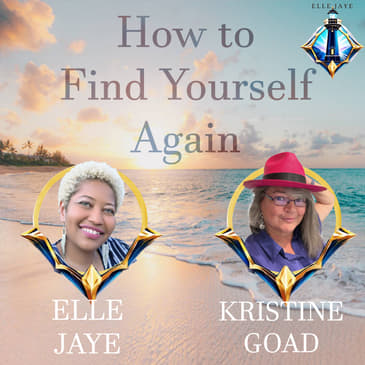
What happens when you stop trying to have the whole path figured out and simply take the next right step?
In this episode of Evolving With Elle, Elle Jaye is joined by Kristine Goad, host of Surfing Your Edge, for a conversation about fear, possibility, identity, expectations, and expanding your comfort zone. Together, they explore how women can become so wrapped up in roles and responsibilities that they lose touch with what they actually want — and how small, courageous experiments can help us reconnect with who we are.
Kristine shares why growth happens at the place where fear and possibility meet, why fear doesn’t always need to disappear before we move forward, and how questioning inherited expectations can create space for a fuller expression of ourselves.
Because sometimes you don’t discover your path by planning it. You discover it by walking it.
Highlights:
The conversation explores learning to respect fear, understand where it comes from, and move alongside it rather than trying to force it away.
- Growth happens at the edge of your comfort zone.
- Fear doesn’t always need to disappear before you move forward.
- Unexamined expectations can shape how we live
- You are more than the roles you perform.
- You don’t need the whole path mapped out.
About Kristine Goad:
Kristine Goad is endlessly curious about the moment when “I could never” becomes “What if I tried?” As the Surfing Your Edge Coach, she helps people transform their relationship with fear, trust themselves more deeply, and create lives that feel bigger, bolder, and more fully their own. Her approach blends coaching, adventure, experimentation, and wonder. She is less interested in fearless living than in what becomes possible when we get curious about the things that scare us.
Connect with Kristine:
Substack: https://kristine.substack.com
Website: https://kristinegoad.com
Facebook: https://www.facebook.com/kristinegoad
YouTube: https://www.youtube.com/@KristineGoad
LinkedIn: https://www.linkedin.com/in/kristinegoad
Kristine’s Gift for you:
Book your very own personal Possibility Party: https://calendar.app.google/DsMvD6Atvdprf49U9
Check out Kristine’s Podcast Surfing Your Edge:
https://inspiredspeakernetwork.com/podcast/surfing-your-edge-where-fear-and-possibility-meet
Visit our GIFT VAULT - updated weekly for more gifts from other guests on this podcast and other podcasts in our network.
https://network.inspiredspeakernetwork.com/vault
About the Host:
Elle Jaye is a professional woman, speaker, facilitator, entrepreneur, and host of “Evolving with Elle: When Capable Women Carry Too Much”. Drawing from lived transformation, professional leadership, entrepreneurship, and continued study, she partners with capable, heart-centered women who appear successful yet feel overwhelmed, second-guess themselves, or are tired of living by expectations they did not choose. As a Holistic Alignment Strategist, Elle uses honest reflection, elevating conversations, and her mirror, map, and method approach to support women in reclaiming their inner authority, honoring their capacity, and creating lives rooted in their values. She believes evolution is personal, but it does not have to be solitary.
Connect with Elle:
Website: https://mailchi.mp/3ae59b526c7c/ellejaye
Instagram: https://www.instagram.com/ellejayesllc
Facebook: https://www.facebook.com/ElleJayesllc
Youtube: https://www.youtube.com/@THRIVEAfter
Elle’s gift for you:
Weekly Elevating Conversations
Elle invites you to join her weekly Elevating Conversations While Multitasking call on zoom
Claim Your Gift: https://us06web.zoom.us/meeting/register/thntrG7IRoavTgxRTOrQuA#/registration
The Evolving With Elle Podcast is proud to be on the Inspired Speaker Network.
⭐⭐⭐⭐⭐ Don’t forget to follow, rate & review. It helps us reach more people who want to create positive change in the world, like you.
Check out More Shows from the Network at https://inspiredspeakernetwork.com
Thanks for listening!
Thanks so much for listening to our podcast! If you enjoyed this episode and think that others could benefit from listening, please share it using the social media buttons on this page. Do you have some feedback or questions about this episode? Leave a comment!
Subscribe to the podcast
If you would like to get automatic updates of new podcast episodes, you can subscribe to the podcast on our Network, Apple Podcasts, YouTube, or your favorite podcast app.
Leave us an Apple Podcasts review
Ratings and reviews from our listeners are extremely valuable to us and greatly appreciated. All the main search engines reference Apple metrics so ranking higher on Apple Podcasts will expose our show to more awesome listeners like you. If you have a minute, please leave an honest review on Apple Podcasts.
Welcome to Evolving with Elle, where a capable woman recognizes what she's managing, understands
Speaker:the responsibilities that she's carrying, and chooses self-honoring over self-abandonment,
Speaker:and decides to continue, change, or release.
Speaker:I am Elle. I bring the mirror, the map, and the method. You choose how you show up in a way that honors your capacity.
Speaker:So let's lean in, learn, and evolve together.
Speaker:We are here with Kristine Goad today. She is one of the other founding members of the Inspired Speaker Podcast Network.
Speaker:And her podcast is called Surfing Your Edge, and I so wanted to have her here because you know that
Speaker:we talk about the different roles that we have as people, the responsibilities and relationships
Speaker:attached to those roles, and then those sneaky rigid rules that kind of get embedded with the
Speaker:responsibilities, i.e. expectations. So without further ado, we are going to bring Kristine on and let her say hello.
Speaker:Hello. I'm really happy to be here with you, Elle Jaye.
Speaker:Thank you so much, Kristine. And you can just call me Elle. That works for me. And can you share
Speaker:one of the roles that you are most proud of? And then just share about yourself as well.
Speaker:One of the roles that I'm most proud of, I would have to say it's my current professional role.
Speaker:I'm the Surfing Your Edge coach, as you've already said. And I really like who I'm becoming in that role.
Speaker:I like the support I'm able to lend people who need it or want it. I don't know if they actually
Speaker:need it, but they want it. And I'm just, it's the role that's letting me grow the fastest and the most.
Speaker:That is awesome. So what got you into Surfing Your Edge? Why that? And what does that even mean?
Speaker:That's a good question. Two good questions. Basically, it took me, let's see, I graduated
Speaker:with my master's in 95 and started my Surfing Your Edge business, which wasn't called the
Speaker:Surfing Your Edge business, back in 2015. So in between there, I was trying to find myself,
Speaker:and I did all kinds of crazy things, including a cross-country bike trip where I thought the
Speaker:universe would just whisper in my ear where I should be in the world and what I should be doing.
Speaker:They would tell me what box I belonged in that would use all of my passions and interests and
Speaker:all of that. And I didn't hear the universe whisper that in my ear.
Speaker:And so I had to continue feeling my way along. For the 10 years before I started my business,
Speaker:I was supporting a very talented artist and children's book author and publisher.
Speaker:And I was running the business backend of her artistic company and helping her bring
Speaker:her visions into the world, doing things that she hadn't done before. So I would figure out the how
Speaker:to help her get things into the world. And I loved that. I grew a lot. I learned a lot.
Speaker:But I also felt that there were more people in the world who could use that kind of support,
Speaker:who could use someone to help them hold the vision and figure out the steps along the way.
Speaker:And when my husband changed jobs and we had to move to different states,
Speaker:that seemed like the right time for me to take the leap and actually step into becoming a coach.
Speaker:Surfing your edge is a phrase that I've used for a while. And basically it means, for me, it means
Speaker:being out on the edge of your comfort zone and staying out there a little bit longer than you
Speaker:probably want to so that the comfort zone actually expands and you get comfortable doing things that
Speaker:you weren't before. In my podcast, I refer to it as the place where fear and possibility meet.
Speaker:It's the place where reality and possibility meet. So yeah, that's the phrase that I'm living into.
Speaker:And I thank you for sharing your life journey and explaining what surfing your edge means.
Speaker:Because I love how you were what I would call you did some expectancy work, right? You took that
Speaker:chance and said, hey, let me try this. And I expect the universe to let me know what I'm
Speaker:supposed to do. What's the box? And then you did it. And then you waited to see what was happening.
Speaker:And then you're like, oh, no, that's not it. So and you learn from that. And then you kept living
Speaker:and you've been doing that work of experimenting, playing, allowing, choosing. You continue to make
Speaker:choices. And in surfing your edge, you're like, hey, I'm going to make this choice.
Speaker:Certainly, it's at the edge of my comfort zone. But it's going to stretch me. It's going to expand
Speaker:my comfort zone. And I love that vision of surfing your edge to expand your comfort zone in a way
Speaker:that is, it sounds like it's in a way that's not overwhelming. It fits you. It fits the person for
Speaker:the moment. And you are supporting yourself and others, because it also sounds like you are not
Speaker:only doing it by yourself, but you're also doing it in community. Is that also accurate?
Speaker:With my clients? Yeah.
Speaker:Okay. Because and that's still community. Because with your clients, what I learned is
Speaker:that's kind of like this built in community. Because as the coach, a lot of people may look
Speaker:at us like, oh, you're the expert, you've already arrived. And what you're saying is no,
Speaker:I haven't arrived yet. And I am continuing to go like as you are expanding your comfort zone,
Speaker:you continue to expand it. Yeah. So with that, your clients and partnerships and collaborations
Speaker:that you have support you in continuing to surf that edge and expand your comfort zone.
Speaker:Is that pretty accurate? Absolutely. When I created what I'm
Speaker:calling the surfing your edge experience, which is my flagship program, that was me
Speaker:deciding that I wanted to do the thing that scared me the most in front of other people
Speaker:and take them with me. So we go to learn to surf on this retreat, we go for eight days to Panama,
Speaker:and we take four days, we spend about 90 minutes each day learning to surf. And
Speaker:once I realized that I could be in a leadership role and vulnerable and scared,
Speaker:that's what my whole business has been built around ever since.
Speaker:Is like I'm doing the thing that scares me right alongside you doing the thing that scares you.
Speaker:And it's always changing. I'm very transparent about the experiments I run and when they
Speaker:work and when they don't and when they bring, I mean, whatever results they bring,
Speaker:I assume that's a success because I've learned something, right?
Speaker:Yes, most definitely, Kristine. And the next thing I want to touch on is that
Speaker:you mentioned fear, where fear and possibility meet and reality and possibility meet.
Speaker:I want to touch on that because a lot of times we want to be scared of fear. We want to resist
Speaker:fear and say, oh no, I'm not scared. But let's be honest. I believe that there's two types of fear.
Speaker:There's a fear that's the normal, healthy fear that helps you
Speaker:expand your comfort zone. And then there's also what I would call that debilitating, overarching,
Speaker:not yours kind of fear, i.e. a spirit of fear kind of thing. Not to be like religious or anything,
Speaker:but it's really a force, you know, that people have used to hold people captive. And that's the
Speaker:kind of fear that we've got to be discerning and vigilant about. What do you, as I share that, okay.
Speaker:I love that idea of it being almost like the space we swim in, right? The fear is out there.
Speaker:There are a lot of enforcers in the world who will try to tell you this is your lane.
Speaker:This is your box. This is what's possible for you. And sometimes they're doing it
Speaker:because they really are scared for you and they really do care and want you to be safe.
Speaker:Sometimes they're doing it because they don't want you questioning the status quo because that's not
Speaker:safe for them. It makes them either look at who they are and what they're willing to attempt,
Speaker:or it makes them feel like, you know, if you are breaking all of the rules,
Speaker:then, you know, what are rules good for, right? So, yes, I completely agree with you. There is a
Speaker:spirit of fear that we come up against that we need to learn to navigate. And there's also all
Speaker:of those fears that we've embodied that were given to us, right? And also those little voices
Speaker:in our heads that pop up and say, oh no, we want to keep you alive. You don't get to go do that
Speaker:thing. Right. And to that point, that is natural. Yes. It's actually what our brain does. Right.
Speaker:And I, you know, with so many people saying, you need to fight, you need to push through
Speaker:and don't allow, don't go into survival mode. You're not a victim. And they're speaking about it
Speaker:as if it's not a bodily system thing that we need to also respect and honor.
Speaker:Right. It's not something that we can force. It's something that we get to
Speaker:be gentle with because that's an edge for some of us. Right. Where we might actually need,
Speaker:a person might actually need a mental health professional to support them with that aspect of
Speaker:the way in which we actually work and function with the reptilian brain and all of those different
Speaker:things. Right. And then your frontal lobe and all of that, and then how it all works with the
Speaker:body. Because I had an interview the other day with Madhuri who talks about mind body and saying,
Speaker:it's one system. And then in having conversations with LaQuincy, as she was talking about,
Speaker:we were having discussions about that internal conflict as well. Right. So we get to honor
Speaker:that part of ourselves in such a way that we respect it and not fear it. We respect it and
Speaker:not try to control it as if it's an enemy of ours. Right. So in respecting how our brain actually
Speaker:works, we can talk to ourselves and honor and have that relationship with ourselves. Because
Speaker:when I talk about the roles that we have, you have shared that you are a business owner,
Speaker:you have been an employee and you're a wife. Right. So those are some of the three roles that
Speaker:you've shared so far today. Right. And in each of those roles, you have relationships.
Speaker:You have a relationship with yourself, which is where you went on the bike ride
Speaker:and you're like, Hey universe, tell me what to do. And then you were like, okay,
Speaker:now let me get in relationship and work. And then you're like, Oh, I'm supporting
Speaker:my, this artistic employer with her work. And that's how it came to you to support people with
Speaker:stepping out of their comfort zone. And then your spouse moved you guys to a different state.
Speaker:And you're like, Hey, this is how I'm going to do it. Each and every role that you were in
Speaker:impacted a choice that you made for you. Right. And there was, it sounded like there was the fear
Speaker:attached to it. And when you were speaking just now, you were like, Oh, those embodied fears.
Speaker:What I would call those is expectations, the embodied fears and the rules that you were
Speaker:speaking about earlier, I would call those expectations because they came from society,
Speaker:came from culture, came from family. And you just, as you said, embodied began to own those
Speaker:until you're like, Huh, no, that doesn't serve me. Is that accurate? You started examining those
Speaker:rules and embody fears, what I call expectations and did something with them. Is that accurate?
Speaker:That is accurate. And it's so funny because I feel like not only am I examining the fears that I've
Speaker:inherited, but I'm also examining, examining the idea, the identities that I've had, right? I've
Speaker:had ideas about who I am, you know, about my body and what my body is able to do. Since I was in
Speaker:elementary school, we used to have to do crazy things in school, like crab walk. You know,
Speaker:I remember that were your hands. And yeah, I'm like, this feels weird. And I feel like I don't
Speaker:like this. And I don't feel like my body moves this way. And I was always embarrassed to move
Speaker:in front of other kids, even in elementary school. And so I've had to really and I'm
Speaker:still a big girl. And you know, to go surfing, the first the first photos that came back from
Speaker:my very first surf retreat, I weighed 230 pounds when I went and someone took a photo of me and
Speaker:showed it to me afterward. And I just started crying. I'm like, Oh my gosh, you know, this is
Speaker:this is not what I want to look like. This is not what my head thinks I look like.
Speaker:And I've had to work really hard to be okay, with all of the identities that
Speaker:to really question which identities serve me and which identities don't alongside all of those
Speaker:fears. And that's, again, where the growing happens, right? We're always evolving and becoming
Speaker:something new. And my goal, I wanted to say this earlier, when we were talking about
Speaker:surfing your edge, it's not just so that you can look cool, or that so you can, you know,
Speaker:jump through hoops that impress other people or, you know, improve your, you know, social standing
Speaker:in the world. It's not about that. It's about right, getting closer to being the person you
Speaker:were born to be. That's the whole purpose behind surfing your edge, in my opinion, is,
Speaker:I think we're here to be the fullest expression of ourselves. And you have to surf your edge to do
Speaker:that. I Oh, boy, you said a mouthful right there. And I'm gonna jump on that train right now. So
Speaker:when you say we are here to live out that full expression of ourselves, what I call that is
Speaker:your core essence. And that's cor, your heart in Latin, right? We get to live out our heart essence.
Speaker:And the way I partner and support women with that is in asking the question that I asked you,
Speaker:or some form of it, like what role are you most proud of? Or what is one accomplishment
Speaker:that you have done that has that you haven't fully celebrated, that no one else would say
Speaker:is a good thing or something that you're supposed to do. But it's something that you were so busy
Speaker:chasing results, that you didn't take time to stop and say, I did that. And then as you celebrate
Speaker:that thing, you get to look at, okay, I'm glad that I did that. Well, who was I being in order
Speaker:to achieve that result? And when you examine those characteristics of who you were, you actually get
Speaker:to understand that's actually who you are. But when we have those places where we're in that
Speaker:fear, whether it's embodied or the expectations, the rigid rules, sometimes in some of our roles
Speaker:or aspects of life, those cloud our mind and overtake our beingness to where we are, our heart,
Speaker:the heart of who we are is underneath some stuff, right? So my main goal is to help
Speaker:excavate, pull up and pull out and say, hey, look, that thing that you said that you were proud to
Speaker:accomplish, this is how you were being in order to accomplish that. Now, now that you know that
Speaker:about yourself, take that way of being and put it on top of any other roles where you feel more
Speaker:challenged. And that's why I am very intentional with the word identity. And I know you used it.
Speaker:And I want to share something. Are you okay if I share my viewpoint on identity?
Speaker:Yeah. I love doing word studies. And I looked up the word identity because
Speaker:it always bothered me. And I didn't understand why until I did the etymology. Because people
Speaker:like, oh, I'm looking for my identity. I'm searching for my identity. I was searching
Speaker:for mine too. And then when I looked up the word, it means sameness. My mind was blown.
Speaker:And I'm like, oh, no, I'm not searching for my sameness. I'm searching for my genuine, unique,
Speaker:authentic self. So I'm not searching for the sameness of anything because I'm not the same
Speaker:as Kristine, as Danielle or Joe Blow or Joan Blow on the street. I am Elle. I'm uniquely,
Speaker:authentically me. So what's at the heart of me? What's at my core? And that opened
Speaker:so many more possibilities for me to begin to model what I want in the roles that I have,
Speaker:instead of allowing the roles to be a measuring stick. Like, no, thank you.
Speaker:Let me be the role model that I want to be from my heart, from my values.
Speaker:And then I get to own the role instead of the role owning me. And that's what I want to share.
Speaker:Because what I recognized, Kristine, I was intertwining not only the roles with expectations,
Speaker:I was also merging all the roles together with their expectations and responsibilities,
Speaker:rather than saying, okay, this is me as a woman. Yes.
Speaker:This is me as an employee, as a business owner, as a mother, as a co-parent, a spouse, whatever,
Speaker:right? So I talk about it in the terms of an orchestra, because orchestras have their parts.
Speaker:And when an orchestra plays, you're hearing all the parts. But sometimes you can hear the strings
Speaker:more than anything else. Or sometimes you can hear the drums or the woodwinds, whatever. That's
Speaker:the same with our roles. But when we get clear of this is responsibility for this, and stuff
Speaker:stops bleeding into each other, freedom. This is me from my heart. And this is me as the way I
Speaker:want to show up in this role as a business owner. And with me showing up this way,
Speaker:or you, Kristine, showing up the way that you choose as a business owner,
Speaker:that means that you get to say, I'm going to honor myself, honor my employees, honor my
Speaker:collaborators and vendors and everyone else, so that you don't feel like you're being taken
Speaker:advantage of. Or that you're having not only are you expanding your comfort zone, you're also
Speaker:having unnecessary or possibly necessary interactions that could have been avoided if
Speaker:you stayed true to your values kind of thing. So how is that landing for you, as I shared about
Speaker:core essence identity and being able to separate the different roles? What comes to mind for you?
Speaker:I love that. I love that. I think we tend to move really quickly. The way I've described it is that
Speaker:you're what the person in front of you needs you to be. And you're really good at it. And you don't
Speaker:even recognize that when the person in front of you changes, you change. And I think that
Speaker:once you start to recognize the distinction in your roles, the way you just described, that
Speaker:kind of shifts. You don't necessarily shift every time the person in front of you
Speaker:shifts or the role that you're playing comes to the fore. I don't know if I'm saying
Speaker:this right. But it sounds to me like that's when you get to be you across all of the
Speaker:instruments. I don't know if that sounds right. It does to me.
Speaker:I'm following you. I'm trying. I love the idea of it being an orchestra and that you don't
Speaker:play just one instrument or that you don't necessarily play one instrument and put it down
Speaker:and pick up the next. That you've got it all within you and you can play all the notes however
Speaker:you want to play them. Yeah, because each person is the conductor of their own lives.
Speaker:And with the work that you're doing and how you've shared that women have been like they've
Speaker:allowed themselves just to be molded and be the person that the person in front of them needed.
Speaker:That's exhausting. Yes. And that's why I believe so many women are tired because
Speaker:instead of living by their own values and who they be on the inside, because
Speaker:who's got time for that? Who's got time to figure that out, right? Right. And it requires permission.
Speaker:Right. Who's given them permission to take the time to figure out who they are?
Speaker:And one of the things that I find with my clients when they first come to me is a lot of times
Speaker:they just need someone to say it's okay to spend the time figuring themselves out, to figure out
Speaker:who I am now, aside from all of those expectations, aside from all of those roles that I play,
Speaker:aside from all of the things I've done, just because I'm really good at it,
Speaker:that doesn't mean I have to keep doing it. Right. It's like, I don't have to carry that anymore.
Speaker:I can put it down. Right. And also the other, the piece that goes alongside that is that,
Speaker:well, I don't want to ask for more because what I've got is so good. A lot of women feel like if
Speaker:they ask for more or they take the time to think about what more there would be,
Speaker:they're saying they're not grateful. And women are grateful, right? They love their lives. I
Speaker:know very few women who absolutely hate their lives. They'd like things to change in them,
Speaker:but they're grateful for the good stuff and they want that to be apparent.
Speaker:Yeah. So, but they don't, so they feel like they can't even say, well, if I, they can't even take
Speaker:the time to figure out what it would look like if there was something different. What would it look
Speaker:and feel like if I got to bring more of my core to the, to the forefront? What does that even
Speaker:look like for me? You know, I think I've had, I had a conversation with a woman who was going
Speaker:through divorce and she had a teenage son who spent two weeks out of every month now
Speaker:with her husband, with her ex-husband, leaving her alone for two weeks in the house. And she's
Speaker:like, what do I like to eat? What do I like to do? Where do I want to go? And I mean,
Speaker:on even the most basic levels, we can lose ourselves in all of those roles when we let them
Speaker:mash together. And we don't feel we have the right to take the time to figure out
Speaker:what we really want and like, and you know, want, how we want to be in the world.
Speaker:Right. And similar to the woman you were, your client that you were just mentioning,
Speaker:I have a similar experience in getting a divorce. And when my children were not at home,
Speaker:I was like, I had the same questions. Right. And one of the things I started doing
Speaker:was Eventbrite, finding, finding free local things to do. And sometimes they, there was also a cost.
Speaker:So I also invested in myself as well. So I found this, it was called Sip, Step and Socialize.
Speaker:So of course there were some alcoholic beverages, but I, anyway, you could drink. And then Step,
Speaker:they had someone there teaching us line dances. I love it. I was like, I love dancing. So I went
Speaker:there and then the socializing, I met people, you know, and I was like, I'm divorced. Is anybody
Speaker:going to like what I look like? Because like you, I was like, I'm the weight that I do not want to be
Speaker:right now. And I, I wanted to cry at pictures too. So I wanted to just let you know,
Speaker:I weighed the same as you, by the way. So I was just like, and, but there were three guys
Speaker:that were like, Hey, I'll give you my number. I was like, wait a minute. I look like this and
Speaker:you still want my number? That's what I was saying to myself. But I had to courageously
Speaker:step out there and I didn't go alone. I, I had someone come with me. She was late, but oh, well,
Speaker:we were there together just enjoying ourselves, dancing, learning. And that is scary. It was
Speaker:one of those edgy moments. But after I did it, Kristine, I was like, Oh, I need to find some
Speaker:more of these where I can go out and do things. So another thing that I found was on Valentine's
Speaker:day, they had a Galentine's day event and it was hiking. I was like, Ooh, let me go into nature.
Speaker:It's winter time. There shouldn't be any snakes. And so we walked a trail that led us to the lake
Speaker:and they had some water, the water had receded off of these boulders. And I was just like,
Speaker:okay, let me just go sit out on these boulders and reflect. It felt so good
Speaker:to do that. And again, that one, I knew no one. Wow. But I did it anyway. And that was some
Speaker:definite surfing, what I would call growth edge for me because I believe it or not, I'm, I'm a
Speaker:very shy person when I don't know the people. Right. So my growth edge is what I call it.
Speaker:Is I needed to like expand my comfort zone and do something to see what would actually happen
Speaker:because in the past, things like that didn't turn out well. Cause I did have an experience
Speaker:where I went somewhere not really knowing anybody and it wasn't the best experience. Right.
Speaker:Hmm. But I still like what you were saying in doing it, I learned something. So every experience
Speaker:that we step into, we get to lean into it and learn from it and then elevate, evolve, level up
Speaker:and grow and mature and get more and more connected with who we are, expand our comfort zones
Speaker:and I love how you illustrate the expansion is you do it on the edge. You're not stepping
Speaker:all the way out of your comfort zone. You're taking like a, is it like a baby step or something
Speaker:outside the comfort zone? That edge is that which, how you, how would you describe that edge surfing?
Speaker:I, yes, that's what I try to hold for my clients. We try to figure out what the full vision is.
Speaker:And then we just take one or two steps toward it. And I hold all of the other steps. So you
Speaker:don't have to, right. You just do. If you, and if you can design it so that it's the smallest step,
Speaker:so small that you just would feel ridiculous if you didn't do it.
Speaker:I love that. The simplicity. Yeah. I think that's a great way to start, but I love that you had the
Speaker:courage that you claimed that you are worth it, right? You are worth trying these new things.
Speaker:And you trusted on some level that you were going to survive it and you were going to be okay.
Speaker:And that's, it takes a lot of courage. So congratulations. I'm so glad you did that.
Speaker:And I know it's just continued. I'm sure you've got many, many stories beyond those,
Speaker:but those were beautiful first stories. Those are gorgeous.
Speaker:Yes. And when we share experiences like this in this, in the conversation that we're having,
Speaker:a lot of times women don't know where to even start. Yeah. And because I didn't know someone
Speaker:was like, try Eventbrite. Okay. So now I'm past, I'm paying that forward. Try Eventbrite or Meetup
Speaker:or any event space where you can go and, you know, surf your edge and do what you do something
Speaker:that you haven't done before to build that mind body awareness. Because a lot of people may think,
Speaker:oh, it's just in my mind. I just need to control my mind, have the right mindset. Well, your body
Speaker:and mind actually go together. So what I like to call it is your body mindset,
Speaker:because you've got to allow your body to also experience it to communicate it to your brain.
Speaker:I'm safe. Otherwise we're just allowing that survival part of our brain to rule and say, no,
Speaker:don't do it. Don't do it. And your body is like, okay, I'm not. But if we step out there
Speaker:and courageously and do it in a way that is like what you were saying, one or two steps
Speaker:beyond what we're comfortable with our brain and body can, because our body's going to react.
Speaker:Our body remembers so much and our, we could allow our brain. We can talk to ourselves
Speaker:essentially is what I'm saying. We can talk to ourselves in such a way to say, Hey, Kristine,
Speaker:Hey, Elle, you are going to be okay. Just take this baby step. Oh, you you're hesitant. You
Speaker:feel a particular way. Let's express those feelings. Hey, Elle's got, you can call Kristine.
Speaker:She's got emergency hours. I don't know if you have like those call me for 30 minute hours or
Speaker:someone or a mental health professional, someone who you can connect with to be able to express,
Speaker:Hey, this is what I'm feeling. Not expect them to carry your feeling or be stressed out about it,
Speaker:but just be able to say something out loud. Because as that woman who was divorced, who was
Speaker:used to having her children around her, and then they were bouncing back and forth, right?
Speaker:Being in the house by yourself, without those people that came from your body or that you
Speaker:adopted and put energy and all of that into, and then they're not there anymore. You're like, Oh
Speaker:my God. Cause that's a relationship because you were so many of us are so busy putting a lot into
Speaker:that parental parent child relationship that we don't put as much energy into us ourselves.
Speaker:And then when we have that space, we feel untethered. Yes.
Speaker:But I'm so glad that you can hold the rest of the steps while we surf that edge.
Speaker:Yeah. I mean, and I love what you say about being respectful of your body's response.
Speaker:The way I had, the reason I created the surfing at your edge experience is because I was afraid
Speaker:of open water and I wanted to learn to surf to kind of come out, overcome that.
Speaker:Yeah. And overcome isn't quite the right word either. I wanted to manage my fear in a healthy
Speaker:way. And I've before that I had been doing little sprint distance triathlons, trying to
Speaker:overcome my fear of open water. And the first time I get in the water, the first time I get in open
Speaker:water, I still panic. And I'm in several triathlon groups on Facebook. I still, I don't do triathlons
Speaker:right now, but I'm in those groups. And the biggest thing that comes up is the, how do I
Speaker:deal with the fear of water? Right. And there are seasoned triathletes who, even though they've been
Speaker:doing this for years, when they get in the water, there's their initial panic. And you have to,
Speaker:as you said, talk to yourself and remind yourself, you've done this. This is what it
Speaker:feels like. This is just the churn. This is just everybody trying to find their pace.
Speaker:You're going to find your water. You'll finish. It's going to be fine. So sometimes the fear
Speaker:never really goes away. And you just have to learn to trust yourself and give yourself that space
Speaker:to say like, okay, this is the fear. This is what always happens here. It's okay. It's normal.
Speaker:We'll get through it. And then you get through it.
Speaker:Yes. Right. And that's the, and that fear is what happened. I think that's the normal
Speaker:fear because every single emotion is present in our bodies and fear is, is one of those.
Speaker:And that's what, again, we have to make that distinction and discern between which fear is it
Speaker:and where is it coming from and things like that. So Kristine, we could probably talk a whole lot
Speaker:longer about, because this is so comfortable having this conversation with you, but we must
Speaker:tie this up. So what would you like to end with, like to share about the surfing your edge? Do you
Speaker:have something that you would like to share with the audience? I'm going to take that two different
Speaker:ways. The first way is there's something that you were talking about taking the first couple of
Speaker:steps and we didn't get to this exactly. I think a lot of times women think they can or should,
Speaker:because they're smart and they're capable, should be able to map out a path from where they are to
Speaker:where they want to be. They should be able to clearly see where they want to go and then map
Speaker:out a straight line that gets them straight there. That's what we think is the expectation
Speaker:for who we are and what we should be able to accomplish. And from my experience, 10 years of
Speaker:trying to do that, what I learned finally is that a path is made by walking. And so what you do
Speaker:is you take that first step and then you look around and you're like, what step feels right
Speaker:next? And you take that step. And it's only after you've taken multiple steps can you look behind
Speaker:you and go, oh, that's my path, right? Because if you can see the path laid out clearly before you,
Speaker:there's a chance it's somebody else's path. Right. And it's not your own. I love that.
Speaker:Yeah. So that was the first thing that I wanted to, I think that's what I want to end on.
Speaker:And I wasn't sure if you were going to invite me to offer a gift to your people. So I will need
Speaker:to create this because I haven't created it yet. But I will get you a link where if people would
Speaker:like to spend an hour with me just talking about possibilities, I love having little mini
Speaker:possibility parties with people. And I would love to just have a chat.
Speaker:Oh, that is awesome. So in the show notes and in the Inspire Speaker Vault, you will find
Speaker:Kristine's gift because, you know, this episode will be airing, but no buts. It will be in the
Speaker:opportunity to hop on and talk because when I was sharing about what I shared that I needed to
Speaker:celebrate, Kristine, just so that you know, is I went from entry level to manager in four years.
Speaker:And instead of celebrating that achievement, I kept moving forward to the next step because
Speaker:I thought it was mapped out for me. You are a mother, you are a wife, and you are in this field,
Speaker:and this is the trajectory you're supposed to go in. After you become this manager,
Speaker:you go to that next step. And I didn't take the time to say, oh, look at everything I did.
Speaker:Celebrate it. And recognize who I was being in order to be that. In order to make,
Speaker:to create those results, I had to be me. And then in celebrating. So I love, I'm so,
Speaker:I'm super excited to have these conversations because I believe what we're talking about
Speaker:is very aligned. You are the possibilities and expanding your comfort zone because I found this
Speaker:journal that said nothing great came from a comfort zone. And you are asking people to
Speaker:expand and be great by surfing the edge of that comfort zone because, yeah, that's what they're
Speaker:doing. And there's so many possibilities in that. And the experimentation and learning and
Speaker:being able to look back and see, oh, that was the next right step. And that worked. And that worked.
Speaker:And even if that step didn't work, what did I learn from that step? Which is very similar to
Speaker:what I'm sharing with expectancy. So instead of living in the rigid rules of expectations that you
Speaker:didn't choose and you didn't examine, you get to choose what you expect. And then you be the
Speaker:person that can achieve that. And as you are doing what you need to do from that place of being,
Speaker:you see what happens. That's expectancy. So the expectations aren't bad. It's just the
Speaker:unexamined ones. I wouldn't call them bad. I just say you just need to examine them and be discerning.
Speaker:So expectancy, surfing your edge, so aligned. And I would love to continue to work with you
Speaker:on different things, by the way. Well, I love that. And I'm actually thinking I need to have you on
Speaker:as my guest so we can talk about expectancy and how expectation, what you're expecting for your
Speaker:future, has a bigger role on who you're being now than you know. So I want to continue the
Speaker:conversation over on Surfing Your Edge. Yay! I agree. We're in alignment there. So let's get that
Speaker:scheduled. Awesome. So with that, we will end here. And just know, Kristine is going to have a
Speaker:gift for you. It will be in the show notes and in the vault. So thank you so much, Kristine.
Speaker:And let's all go out and surf our edge. Thank you, Elle. You guys, this session with Kristine
Speaker:was phenomenal. I can't wait to hop on her podcast, Surfing Your Edge. We
Speaker:shared so much in this podcast about being able to be on that edge of your comfort zone so that
Speaker:you can expand it. And as you expand your comfort zone, you are in relationship with that healthy
Speaker:fear, and you are expanding that. And you're able to talk to yourself in such a way that you know
Speaker:you're going to be fine because you'll remember those steps that you took before. And Kristine
Speaker:had great wisdom in saying, instead of having your path already lined out,
Speaker:just take the next right step and then be able to turn around and reflect on it.
Speaker:And that helps you continue to take that next right step. So hopefully, during this podcast,
Speaker:we brought the mirror, the map, and the method. And you get to choose. And remember,
Speaker:evolution is not a solitary sport.