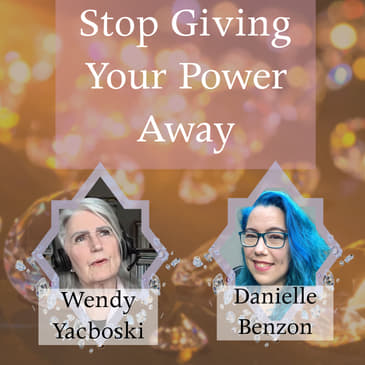
Forgiveness isn’t about excusing what happened - it’s about freeing yourself from the pain of the past. In this week’s episode, Wendy and Danielle explore forgiveness, letting go, emotional healing, self-compassion, and reclaiming your personal power. Discover how accepting your emotions and practicing self-forgiveness can help you move forward without denying what you’ve experienced.
The Shift Beneath the Words:
- Forgiveness is about freedom, not excusing the behavior.
- Letting go helps you reclaim your personal power.
- Feel your emotions instead of suppressing them.
- Self-forgiveness and self-compassion are essential.
Acceptance doesn’t eliminate boundaries or consequences. You can let go with compassion while still acknowledging that something was wrong, maintaining healthy boundaries, and allowing people to experience the consequences of their actions.
About The Guest:
Danielle Benzon has devoted her life to exploring the expressiveness, agility, and power of the voice-body instrument. Her journey began in classical theatre and took her around the world before she founded the Inspired Speaker Academy. Now she draws on that experience to help speakers, professionals, and business owners to own and embody their message, fall wildly in love with speaking, and transform their nerves so that every word they speak vibrates with purpose, truth, and self-celebration.
Connect with Danielle Benzon:
Website: https://www.theinspiredspeakeracademy.com/
LinkedIn: https://www.linkedin.com/in/danielle-benzon
Book A Call: https://book.daniellebenzon.com/
YouTube: https://www.youtube.com/@inspiredspeakeracademy
Danielle’s Gift for you: A Free Ticket To Her Next Masterclass
Each Masterclass focuses on a specific speaking goal while helping you build confidence, strengthen your presence, and communicate with greater clarity and authenticity.
In a safe, supportive environment, you'll gain practical tools to embody your message and speak with purpose and impact.
Claim Your Gift: https://www.theinspiredspeaker.com/gift.html
Visit our GIFT VAULT - updated weekly for more gifts from other guests on this podcast and other podcasts in our network.
https://network.inspiredspeakernetwork.com/vault
About the Host:
Loving to learn, grow, and share what she learns, Wendy most values opportunities life consistently presents for authentic, richer, more fulfilled living. Trained and practiced in New Thought principles and various studies for well over two decades, Wendy believes we are powerful beyond what many have been raised to believe, that we are born with our own affinities of talent and ability for the purpose of not only our own life fulfillment, but to help others. In this, Wendy provides support through speaking, teaching & coaching, ever validating and supporting the power of choice to create greater good for all
Connect with Wendy:
LinkedIn: www.linkedin.com/in/wendy-yacboski
Facebook: facebook.com/wendy.yacboski
Instagram: Instagram.com/coachrev8
Website: weddingceremonyvancouver.ca
YouTube: https://www.youtube.com/channel/UCGdiEPF5Lf6tbwrmhM3_dTQ
The Awakening Woman On The Rise Podcast is proud to be on the Inspired Speaker Network.
⭐⭐⭐⭐⭐ Don’t forget to follow, rate & review. It helps us reach more people who want to create positive change in the world, like you.
Check out More Shows from the Network at https://inspiredspeakernetwork.com
Visit our GIFT VAULT - updated weekly for more gifts from other guests on this podcast and other podcasts in our network.
https://network.inspiredspeakernetwork.com/vault
Thanks for listening!
Thanks so much for listening to our podcast! If you enjoyed this episode and think that others could benefit from listening, please share it using the social media buttons on this page. Do you have some feedback or questions about this episode? Leave a comment!
Subscribe to the podcast
If you would like to get automatic updates of new podcast episodes, you can subscribe to the podcast on our Network, Apple Podcasts, YouTube, or your favorite podcast app.
Leave us an Apple Podcasts review
Ratings and reviews from our listeners are extremely valuable to us and greatly appreciated. All the main search engines reference Apple metrics so ranking higher on Apple Podcasts will expose our show to more awesome listeners like you. If you have a minute, please leave an honest review on Apple Podcasts.
You are listening to The Awakening Woman On
Speaker:The Rise.
Speaker:If you are a woman who is seeking
Speaker:to live a more authentic life, but are
Speaker:feeling not enough to step out fully just
Speaker:yet, you are in the right place.
Speaker:If you are a woman who is looking
Speaker:to live your personal truth and make the
Speaker:impact you truly desire, you are in the
Speaker:right place.
Speaker:I'm your host, Wendy Yacboski.
Speaker:Let's step out in this together.
Speaker:Welcome to season two.
Speaker:And I have a very special surprise for
Speaker:you.
Speaker:A friend and colleague, Danielle Benzon and I,
Speaker:before I started this podcast, had some meetings
Speaker:together where we were discussing our lives.
Speaker:We were looking at them with curiosity, what's
Speaker:working, what's not working, what are we curious
Speaker:about, what maybe we're concerned about, and maybe
Speaker:it's not really helping us to get where
Speaker:we want to go, which another word for
Speaker:is awakening.
Speaker:So, I'm excited to share with you this
Speaker:series that we are choosing to do for
Speaker:you, because it totally blends in with The
Speaker:Awakening Woman On The Rise, because we're talking
Speaker:about what helps us awaken, what doesn't help
Speaker:us awaken.
Speaker:And what I love about what happens with
Speaker:Danielle and I together is that we're very
Speaker:open with each other.
Speaker:We don't always agree, but yet we come
Speaker:to an agreement that different ways of looking
Speaker:at things, different ways of approaching things in
Speaker:life is absolutely perfect for each of us.
Speaker:And so, I know that you will find
Speaker:yourself in these podcast episodes, and hopefully you
Speaker:will feel supported, as I've talked to you
Speaker:previously in the past, that you're not alone
Speaker:in awakening.
Speaker:We are all going through this together.
Speaker:And so, enjoy Danielle and I.
Speaker:You'll be happy you did.
Speaker:Oh my God, Danielle, I'm so happy to
Speaker:be here.
Speaker:We have the best conversations, and I'm glad
Speaker:that we're going to be sharing with others
Speaker:who might be able to appreciate them too.
Speaker:We do.
Speaker:And this is our gift to the world.
Speaker:We have decided that we're going to share
Speaker:our wonderful conversations, because they are.
Speaker:We go really deep.
Speaker:Wendy is an ordained minister.
Speaker:Is that what you are?
Speaker:And she has been working with people for
Speaker:a long time, and she has so many
Speaker:insights.
Speaker:And every time I talk to her, I
Speaker:grow a little bit more.
Speaker:So, hopefully, talking to us both, you will
Speaker:also get some growth out of this.
Speaker:I think that's kind of our plan, is
Speaker:to just discuss the human condition and our
Speaker:vulnerabilities and weaknesses, because we are just humans
Speaker:too, and just our insights.
Speaker:It's going to be great.
Speaker:I'm excited.
Speaker:Yeah, me too.
Speaker:Sorry?
Speaker:We're starting with such a light topic as
Speaker:well.
Speaker:There's no easing you in here.
Speaker:We're just going to throw you in.
Speaker:It's kind of light.
Speaker:Wendy mentioned before we started that she wanted
Speaker:to talk, or at least begin.
Speaker:We don't know where this conversation is going,
Speaker:because it's live.
Speaker:But we're going to start on the theme
Speaker:of forgiveness, because something kind of sparked you
Speaker:this morning.
Speaker:Do you want to start us off?
Speaker:Mm-hmm.
Speaker:So, part of my spiritual development over the
Speaker:years is now including A Course in Miracles.
Speaker:And this morning, I was on a three
Speaker:-hour workshop for forgiveness, where we are asked
Speaker:about 14 questions that we answer, like, what
Speaker:do we feel sad about?
Speaker:What do we feel angry about?
Speaker:All manner of what do we feel guilty
Speaker:about, ashamed about, but ending with, what is
Speaker:it I can do now?
Speaker:It really takes acknowledging the pain that we
Speaker:experience, the unforgiveness, and looking to see how
Speaker:we can forgive and actually free ourselves.
Speaker:This is the thing that really speaks to
Speaker:me about forgiveness, because I never believed that
Speaker:unforgiveness never ended.
Speaker:Let me correct myself.
Speaker:What?
Speaker:Unforgiveness.
Speaker:I know, never ended.
Speaker:Because I'm thinking, how can you undo something
Speaker:that's done?
Speaker:With A Course in Miracles, I am learning.
Speaker:This is so powerful, and it almost brings
Speaker:tears to my eyes, but I won't do
Speaker:that first session.
Speaker:But it brings tears to my eyes that
Speaker:one of the lessons in A Course in
Speaker:Miracles is that I give everything it has.
Speaker:I give everything, the meaning it has, everything
Speaker:that happens in my life, and that's a
Speaker:huge chunk of, what was that?
Speaker:Yeah.
Speaker:Because again, I just really believe that life,
Speaker:what goes on in life, is terminal.
Speaker:I never thought that it was about what
Speaker:I made it mean.
Speaker:And so this is not, when we talk
Speaker:about forgiveness, this is not about saying, this
Speaker:didn't happen, or this didn't hurt.
Speaker:But what am I making it mean about
Speaker:me?
Speaker:If somebody hurt me somehow, it's not maybe
Speaker:just what they said, or the words that
Speaker:they used.
Speaker:It's kind of like, this means I'm not
Speaker:okay.
Speaker:This means I'm not loved.
Speaker:This means I don't ever want to risk
Speaker:again.
Speaker:This means whatever meaning I give it.
Speaker:And it just seems, Danielle, that these days,
Speaker:there is so much challenge in forgiving because
Speaker:some of the things that happen, not only
Speaker:personally, but globally, feel unforgiving.
Speaker:And I can totally understand with various things
Speaker:that have happened over generations appear unforgivable.
Speaker:But forgiveness frees us.
Speaker:It doesn't absolve.
Speaker:It frees us to move on.
Speaker:It's not absolution.
Speaker:And that's, yeah, that's what I wanted to,
Speaker:I have something to say about absolution in
Speaker:a second.
Speaker:But also, I have to say this because
Speaker:I'm a Shakespeare geek.
Speaker:You were talking about, you give everything its
Speaker:meaning.
Speaker:And in Hamlet, he says, nothing is good
Speaker:or bad, but thinking makes it so.
Speaker:And that it's just such a like, yeah,
Speaker:we imbue everything with meaning.
Speaker:Humans are meaning-making machines.
Speaker:It's what we do.
Speaker:And I think that word forgiveness can be
Speaker:very triggering for some people.
Speaker:And I think for me as well, because
Speaker:there are certain things that I think, like,
Speaker:this is not okay.
Speaker:And I don't want to say it's okay,
Speaker:because it's not okay.
Speaker:And I want to stand for what's right.
Speaker:And I want to, you know, I want
Speaker:to fight for freedom and integrity and all
Speaker:that stuff.
Speaker:But at the same time, if I'm holding
Speaker:on to something, that's bad for me.
Speaker:So for me, when you talk about forgiveness,
Speaker:I do a little translation in my brain.
Speaker:And I go, it's not about telling them
Speaker:it's okay.
Speaker:Because sometimes I think a lot of people
Speaker:think forgiveness is about telling them it's okay.
Speaker:Like, no, this is about me, like you
Speaker:said, moving on, freeing myself from that past
Speaker:situation.
Speaker:For me, it's almost more like radical acceptance.
Speaker:Like, I'm not going to dwell on it.
Speaker:I'm not going to think about it anymore.
Speaker:It's not going to own me.
Speaker:I'm not going to wish them ill, because
Speaker:that's not letting go.
Speaker:That's the fruit of the poisonous tree or
Speaker:whatever that poem is.
Speaker:I'm not going to waste my time on
Speaker:that anymore.
Speaker:I'm just going to completely let it go.
Speaker:And for me, that's kind of, and let
Speaker:it go with love, but not by not
Speaker:saying it's okay.
Speaker:And if it, you know, if it happened
Speaker:again, or if someone brought it up or
Speaker:something, I would need to create boundaries and
Speaker:stand against that.
Speaker:But for me, it's more about this radical
Speaker:acceptance of I can't change the past.
Speaker:What has happened has happened.
Speaker:And if I dwell on it, then I'm
Speaker:dragging that into my present and my future.
Speaker:And I don't want to do that.
Speaker:Does that does that jive with your version
Speaker:with your definition?
Speaker:Unknown Speaker Absolutely, it does.
Speaker:And I'm thinking too, it's, it's, it's always
Speaker:easy for me to, to think about, you
Speaker:know, in past years, when, when I believe
Speaker:that somebody did something to me, but let's
Speaker:broaden the spectrum here.
Speaker:We can be in a car accident, or,
Speaker:or, or COVID, or whatever it is something
Speaker:that, that impacts our life in such a
Speaker:way as it's not like it was before.
Speaker:And, and sometimes, something else I've learned is
Speaker:that when I blame someone or something, I
Speaker:am, in fact, giving it my power, because
Speaker:I'm saying that because of you, I'm done,
Speaker:like, you know, this 100% you're giving
Speaker:that, as soon as you blame someone, you're
Speaker:taking your autonomy away, you're taking your, your,
Speaker:your, your efficacy away.
Speaker:And it's like, well, it's because of you.
Speaker:So like, you know, I'm an inanimate object
Speaker:now.
Speaker:And yeah, totally.
Speaker:And that's not, that's not a good way
Speaker:to live.
Speaker:Unknown Speaker Yeah, you know what word just
Speaker:popped into my mind?
Speaker:Daniela's agency.
Speaker:Yes, that's the word I was looking for.
Speaker:Thank you.
Speaker:Unknown Speaker The only reason that I bring
Speaker:it up, because it popped up, bring it
Speaker:up is because I think so many people
Speaker:and I know it's not only men, but
Speaker:a lot of women I know, or hear
Speaker:speak, you know, they've built their agency, and
Speaker:they built their agency by taking responsibility for
Speaker:themselves.
Speaker:It doesn't mean not accepting what's happened.
Speaker:But it's okay.
Speaker:That happened.
Speaker:And I choose now to Unknown Speaker Yes.
Speaker:Yes, that happened.
Speaker:And my therapist is always making sure that
Speaker:she's on me about using and language instead
Speaker:of but language, because you got to you
Speaker:got to use she calls it gray thinking
Speaker:as instead of instead of like black and
Speaker:gray thinking.
Speaker:Because things can exist.
Speaker:You could James is always telling me you
Speaker:could be two things.
Speaker:But it's true.
Speaker:And and life is complex and nuanced.
Speaker:Yeah, I can be in pain.
Speaker:And I can choose to act.
Speaker:I can be completely devastated by something.
Speaker:And I can choose not to let that
Speaker:ruin my the rest of my life.
Speaker:Yeah, absolutely.
Speaker:Yeah, it's not that I don't believe.
Speaker:I don't believe that people deserve what happens
Speaker:to them.
Speaker:I don't believe that I don't think I
Speaker:don't think we live in this universe where
Speaker:we're like, Oh, you must have done something
Speaker:to deserve that horrible thing that happened.
Speaker:I absolutely don't believe that I think the
Speaker:universe is chaotic, and not cruel, just random,
Speaker:random and chaotic and horrible things happen all
Speaker:the time.
Speaker:And we we don't we don't have complete
Speaker:control.
Speaker:We don't have any control over our environment.
Speaker:The only thing that we have control of
Speaker:is, you know, ourselves and that even, you
Speaker:know, only to a degree, but to the
Speaker:degree that we have, I think we should
Speaker:take it.
Speaker:You know, it's not always enough.
Speaker:But it's all we've got.
Speaker:Yeah, yeah, absolutely.
Speaker:And I think, building on what you're saying,
Speaker:Danielle, I've heard in my mind, I'm remembering
Speaker:hearing someone say, I am not going to
Speaker:cry, they're not going to get the benefit
Speaker:of my tears.
Speaker:And, and, and I want to say that
Speaker:feeling our emotions, ideally privately, or with somebody
Speaker:we really, really, really trust.
Speaker:Or somewhere safe, absolutely.
Speaker:But But the important thing about allowing ourselves
Speaker:to feel our emotions, whether it's actually weeping,
Speaker:and or journaling and or screaming into a
Speaker:pillow and or hitting something inanimate.
Speaker:What it does is it helps release from
Speaker:the body.
Speaker:If we're not releasing, it stays there and
Speaker:it becomes a block.
Speaker:Yes.
Speaker:Yes.
Speaker:Emotions are there.
Speaker:There are guides like this is our body
Speaker:talking to us.
Speaker:Your emotions are your body saying, hey, something's
Speaker:wrong.
Speaker:We need to take action.
Speaker:We need to let this go.
Speaker:We need to do whatever.
Speaker:And suppressing or ignoring that information.
Speaker:It's toxic.
Speaker:It's so bad for you.
Speaker:And I personally, I mean, I know that,
Speaker:you know, not everyone feels comfortable being emotional
Speaker:in public.
Speaker:But when I, when I am sad, I
Speaker:kind of have this little defiant streak in
Speaker:me.
Speaker:Because I think that emotions are healthy.
Speaker:And I think feeling your emotions is healthy.
Speaker:Taking your emotions out on somebody is not
Speaker:okay.
Speaker:Again, that's a that's a personal responsibility thing,
Speaker:but feeling them.
Speaker:Everyone should be entitled to feel how they
Speaker:feel at any time, whether they're in public
Speaker:or not.
Speaker:And if I am on the bus, and
Speaker:I am sad, I will cry.
Speaker:Or if I am out in a coffee
Speaker:shop, and I am sad, I will cry.
Speaker:And I have I have gotten pushed back
Speaker:from this.
Speaker:I don't like, you know, I don't lie
Speaker:on the floor and scream.
Speaker:I just you know, if the tears want
Speaker:to come, I let them come.
Speaker:I don't push it down.
Speaker:Because I think that it's, it's healthy.
Speaker:And it's healthy to feel.
Speaker:And I think if we don't model, and
Speaker:we being like, people who feel safe and
Speaker:strong enough, because you know, not everyone has
Speaker:the spoons.
Speaker:And not everyone is in an emotional place
Speaker:where they can be vulnerable.
Speaker:Those of us who can be vulnerable, who
Speaker:do feel safe, I feel like the more
Speaker:we can model emotionality, just as part of
Speaker:our everyday life, the more normal it will
Speaker:become.
Speaker:This is kind of like, you know, talking
Speaker:about mental health, or, you know, we have
Speaker:to normalize it.
Speaker:If we don't normalize being emotional, and I'm
Speaker:not saying, taking your emotions out on someone
Speaker:sitting at a coffee shop and having a
Speaker:coffee by myself with tears going down my
Speaker:face is very different from screaming at someone
Speaker:or, you know, like that, those are not
Speaker:the same thing.
Speaker:But allowing yourself to feel your emotions fully,
Speaker:and let them move through you.
Speaker:Teach them, teach you what they have to
Speaker:teach you.
Speaker:Because they're telling you something important.
Speaker:Yeah, honoring yourself in that way that I
Speaker:think that's a that's a type of self
Speaker:love.
Speaker:Yes.
Speaker:Yeah, absolutely.
Speaker:Danielle.
Speaker:I'm just thinking about the various times.
Speaker:I'm just trying to think whether I have
Speaker:not not been guilty about this.
Speaker:Let me just guilty loaded word.
Speaker:Let's not use that one.
Speaker:Yes.
Speaker:For the next.
Speaker:No, they're not talking about guilt.
Speaker:And I'm just saying that not everyone is
Speaker:aware that when they repress their emotions, emotion
Speaker:is is like emotion, energy in motion.
Speaker:And when when it's repressed, it's it actually
Speaker:needs to come out.
Speaker:Yes, the body can hold it.
Speaker:And there's a point where it needs to
Speaker:come out.
Speaker:And yeah, and when it does, sometimes it's
Speaker:slashing out at someone saying something like, I
Speaker:can't believe that came out of my mouth.
Speaker:Like, you know, so I love what you're
Speaker:saying about self love, Danielle, because and it's
Speaker:not only self love, it's actually loving the
Speaker:world in a way not to give it
Speaker:like such a big global thing.
Speaker:But But when we can love ourselves, we
Speaker:can love others more, which doesn't mean forgiving,
Speaker:I mean, is saying that the that that
Speaker:what was wrong was right.
Speaker:It's not that, but it's about can we
Speaker:love ourselves enough to go?
Speaker:You know what, there's a reason I don't
Speaker:understand that that person did that.
Speaker:And what do I choose?
Speaker:Yeah, and just not let it or just,
Speaker:you know, just let it go.
Speaker:You know, I feel like we don't always
Speaker:have to we don't always have to make
Speaker:nice with the people who've heard us.
Speaker:I don't think that's necessary.
Speaker:I don't think it's healthy.
Speaker:Actually, there's a lot of situations where it's
Speaker:not a good idea.
Speaker:But you don't need to waste your time.
Speaker:There's a difference between like actively pushing them
Speaker:away.
Speaker:And just letting it go.
Speaker:You know, letting it go means there isn't
Speaker:anything left.
Speaker:And what you said about that, you know,
Speaker:the body can hold it, the body can
Speaker:hold emotions, but it creates sickness, and it
Speaker:creates chronic tension.
Speaker:And it, you know, I, I'm in, I'm
Speaker:in my, my early 40s.
Speaker:And I am not a healthy person.
Speaker:But I am weirdly healthy for for the
Speaker:lifestyle that I have.
Speaker:And I honestly think it's because I'm, I'm
Speaker:so emotional.
Speaker:And I'm so open about my emotions.
Speaker:I mean, I may not always practice the
Speaker:best.
Speaker:I'm working on it.
Speaker:I may not always look after my body
Speaker:as well as I can.
Speaker:But that is one thing I do do
Speaker:for my body is I let it feel
Speaker:and I you know, I don't have a
Speaker:lot of a lot of that that tension
Speaker:that that people have that those blocks, and
Speaker:that illness created by emotion, at least that's
Speaker:one area where I am.
Speaker:Because it does it can it and it
Speaker:when it when little bits just come out,
Speaker:like when you snap at someone or something,
Speaker:that's not the whole that's just the little,
Speaker:you know, with a little bit of steam
Speaker:coming out the top, that's not that's not
Speaker:taking the lid off.
Speaker:That's not letting the whole thing kind of
Speaker:air out.
Speaker:That's just a tiny little bit that just
Speaker:escaped.
Speaker:And there's more.
Speaker:And so even if you do, if you
Speaker:do feel that it's, it's not enough to
Speaker:go, Oh, well, I snapped at someone the
Speaker:other day.
Speaker:So now I'm totally Yeah, I think, I
Speaker:think there's Yeah, there's something to be said
Speaker:about, you know, and wanting to walk through
Speaker:the world with love, which means that I'm
Speaker:not holding, I've let that person go, and
Speaker:I don't need to make nice with them.
Speaker:But I'm walking through the world with love.
Speaker:That's my choice.
Speaker:That's my act of rebellion.
Speaker:Yeah.
Speaker:And, and if they come at me again,
Speaker:I will have to, you know, defend myself
Speaker:in some way.
Speaker:But I'm not going to sit around thinking
Speaker:about how I'm going to defend myself, you
Speaker:know, because that's a waste of my energy.
Speaker:Does that mean you're right?
Speaker:Absolutely makes sense.
Speaker:I and I don't think I realized until
Speaker:not that long ago, how much energy self
Speaker:protection requires.
Speaker:Oh, my God.
Speaker:Yeah.
Speaker:You know, and there's probably more to talk
Speaker:about that.
Speaker:But I just I really want to bring
Speaker:up something that I think is so important.
Speaker:And that's self forgiveness.
Speaker:Sometimes, even when someone else has done something
Speaker:to us, let's say.
Speaker:Sometimes we hold guilt for that, too, I
Speaker:must have deserved it, or, or why didn't
Speaker:I say something?
Speaker:Oh, my God, I'm a carpet, like, you
Speaker:know, they're just what, you know, so I
Speaker:think another, you know, self forgiveness, I, it
Speaker:took me a few years to realize that
Speaker:I actually maybe blamed myself for something.
Speaker:Not that I made it happen.
Speaker:But, but, but that I judged myself harshly.
Speaker:Yeah, thinking that maybe it's what I deserved,
Speaker:who I was.
Speaker:And that's not the truth.
Speaker:You know, like, like, like, no human deserves
Speaker:the amount of most most humans go through,
Speaker:you know, like, I think I think all
Speaker:of us have been through more pain than
Speaker:we deserve.
Speaker:Yeah.
Speaker:But I think I think let's talk about
Speaker:self talk.
Speaker:Okay, because that's a whole kettle of fish
Speaker:can of worms.
Speaker:I'm not sure I was gonna say kettle
Speaker:of worms like that's not right.
Speaker:That's a whole other thing, which I think
Speaker:there's a lot in there we can dig
Speaker:deep into.
Speaker:But I love what you said about sometimes
Speaker:we take on something and blame ourselves for
Speaker:something that isn't our fault.
Speaker:And sometimes we just do stupid stuff, bad
Speaker:stuff.
Speaker:I mean, it happens.
Speaker:I think of some of the things that
Speaker:I did more than a decade ago that
Speaker:I am ashamed of, you know, and forgiving
Speaker:myself for those things.
Speaker:It's harder because I can kind of look
Speaker:back and go, at the time, I felt
Speaker:completely justified.
Speaker:And now looking back, I cringe, I'm like,
Speaker:Oh, my goodness, how could you be so,
Speaker:so selfish, so uncaring, so cruel spirited.
Speaker:And I think, but I also think and
Speaker:I can't remember who said this, but a
Speaker:lot of people say this, you know, if
Speaker:you don't cringe at your past self, then
Speaker:you haven't grown.
Speaker:And so that is that is the thing
Speaker:that I tell myself over and over again,
Speaker:to just get over, you know, it's okay,
Speaker:it's okay that I did bad things.
Speaker:And I mean, that sort of forgiveness, I
Speaker:can't go back and fix it.
Speaker:I mean, as much as I can, I
Speaker:do, you know, if there's someone that you
Speaker:can make amends to, or, you know, often
Speaker:it was just a, you know, offhanded remark
Speaker:to someone you're never going to see again,
Speaker:there's nothing I can do about that.
Speaker:But, you know, if the person is still
Speaker:in your life, you can make amends.
Speaker:Or you can, you know, if you can
Speaker:find them or whatever, but even then just,
Speaker:you know, just living by going, Okay, I
Speaker:can't fix what I did.
Speaker:But I can live in the moment, and
Speaker:I can pay it forward.
Speaker:And I can, you know, I can do
Speaker:my best to heal.
Speaker:It may not be that person that I'm
Speaker:helping now, but I'm helping other people.
Speaker:And, you know, live in that way, not,
Speaker:not as a kind of penance, but just
Speaker:as a, as an intention of putting my
Speaker:best out into the world.
Speaker:And I think that's how I'm, I haven't
Speaker:quite forgiven myself for some of the things
Speaker:that I've done, but I'm working on it.
Speaker:And that's, that's, do you have any other
Speaker:advice?
Speaker:Unknown Speaker Well, first of all, not advice,
Speaker:but admiration.
Speaker:I admire you for being as transparent and
Speaker:honest as you are.
Speaker:Because I, I know for myself, that there
Speaker:was a time I felt so much intellectual
Speaker:humiliation at, at acknowledging my, my faults, or
Speaker:my, my weaknesses, or my whatever, like there
Speaker:was some kind of shame about learning, you
Speaker:know, we're all learning in life, right?
Speaker:We're here, here to learn, many of us
Speaker:believe, and shame ourselves for being here to,
Speaker:to learn.
Speaker:Hopefully learning, we tend to hopefully not repeat
Speaker:too many times.
Speaker:But I really do appreciate Danielle, that you
Speaker:were willing to share that.
Speaker:Because I think that, and when I teach
Speaker:for Canadian Mental Health Association in their Living
Speaker:Life to the Full program, it's one thing
Speaker:I say often, I said, this is about
Speaker:information about ourselves, it's about self awareness, it's
Speaker:not about self judgment, it's not about anything
Speaker:like that.
Speaker:Because until we know where we are, we
Speaker:can't really get where we want to be.
Speaker:Unknown Speaker Yes, radical self acceptance.
Speaker:Yeah, yeah, because we're not and we're not
Speaker:who we want to be.
Speaker:We're not.
Speaker:Yeah.
Speaker:Not now.
Speaker:I mean, maybe that's what we're working towards.
Speaker:But we're all human.
Speaker:And we all have bad days.
Speaker:And we all do things we're ashamed of.
Speaker:And I think, I like what you said
Speaker:about learning, you know, if I if I
Speaker:thought of myself, that kind of self parenting
Speaker:thing, you know, if I if I thought
Speaker:of myself as a six year old, who
Speaker:did the thing that I did, would I
Speaker:I wouldn't treat them the way I treat
Speaker:myself now, I would, I would explain, you
Speaker:know, this is why this is why this
Speaker:isn't okay.
Speaker:This is the consequence of what just happened.
Speaker:This is how we can learn from it.
Speaker:But I would be very gentle and compassionate,
Speaker:because I feel like at some point, we
Speaker:feel like, well, because we're growing up, we
Speaker:should know better.
Speaker:And we should.
Speaker:But also, we're constantly having new experiences.
Speaker:And you can't, you know, you can't accommodate
Speaker:for everything.
Speaker:And, you know, there's trauma, and there's all
Speaker:sorts of other reasons why we act the
Speaker:way we do.
Speaker:So I love that that brings a lot
Speaker:of compassion into it.
Speaker:Just treat yourself like you're learning.
Speaker:I love that.
Speaker:That's great advice.
Speaker:So you did have some advice for me
Speaker:after all.
Speaker:Thank you, Wendy.
Speaker:For you, Danielle, free.
Speaker:Oh, excellent.
Speaker:I love it.
Speaker:I'll, I'll send a check in the mail.
Speaker:And Danielle, seriously, can you imagine that, that
Speaker:the more we can practice realizing that we're
Speaker:learning with a sense of compassion for ourselves
Speaker:and for others, how much different the world
Speaker:would be?
Speaker:Not, not everyone knows compassion.
Speaker:And it's apparent that, that some others don't
Speaker:know compassion, but who knows what age they're
Speaker:acting from?
Speaker:You know, yeah.
Speaker:And this is the problem with being taught
Speaker:to suppress your emotions, and being taught, being
Speaker:taught that it's possible to be a purely
Speaker:logical being because it's not, you're not, I'm
Speaker:sorry, you're not a computer.
Speaker:And as much as people would say, Oh,
Speaker:I'm completely logical.
Speaker:Some people more than others.
Speaker:Sure.
Speaker:But not 100%.
Speaker:We're human beings.
Speaker:We aren't, we, the physical system is part
Speaker:of how we interpret the world.
Speaker:And the physical system is not necessarily logical.
Speaker:And it is reactive in a different way.
Speaker:It has its own logic, I suppose.
Speaker:But the point is, is that we, we
Speaker:are often educated out of learning and growing.
Speaker:And we're kind of educated into this controlled,
Speaker:repressed, static state, where we can't grow, because
Speaker:we haven't given ourselves permission.
Speaker:Or, you know, we haven't given ourselves the
Speaker:space to grow.
Speaker:And so we're stuck.
Speaker:And then we have all these adults who
Speaker:are stuck.
Speaker:And yeah, exactly.
Speaker:We don't know what age they're speaking from.
Speaker:And we wonder why there's so much miscommunication
Speaker:and hatred and bigotry in the world.
Speaker:And the more compassionate we can be, but
Speaker:compassionate without ever being, and there's a big
Speaker:difference between compassion and letting things slide.
Speaker:You know, never excusing.
Speaker:Compassionate, but cause and effect still exist.
Speaker:You know, and we don't, you know, and
Speaker:like a six-year-old who maybe punched
Speaker:their friend in the face, we're not going
Speaker:to say it's okay.
Speaker:We're going to say, you hurt that person.
Speaker:They are in pain now.
Speaker:And maybe there's something you can do to
Speaker:rectify that pain.
Speaker:But the consequence might be that you may
Speaker:not have that friend anymore.
Speaker:And that sucks.
Speaker:That's reality.
Speaker:And we're going to compassionately learn through it.
Speaker:But we're not going to say that it's
Speaker:okay.
Speaker:And we're not going to force them to
Speaker:be friends with you, because they may not
Speaker:feel safe.
Speaker:And so accepting the consequences of our actions,
Speaker:accepting the consequences of violence and, you know,
Speaker:like knee-jerk reactions, you know, without thinking,
Speaker:accepting the consequences of that, reactiveness, that's what
Speaker:I wanted to say, without judging or shaming
Speaker:or, you know, this long, drawn-out blame
Speaker:stuff, just kind of compassionately going, well, we
Speaker:live in reality.
Speaker:This is what's going to happen.
Speaker:How can we learn from it?
Speaker:How can we make it better?
Speaker:Yeah, absolutely.
Speaker:Yeah, absolutely.
Speaker:Yeah, I'm just, I'm just thinking, you know,
Speaker:if I was to say something, as a
Speaker:reminder to, you know, to everyone here is
Speaker:to just really remember that forgiveness is not
Speaker:about condoning, but it is about freeing ourselves,
Speaker:whether or not somebody enacted on us, or
Speaker:whether we enacted on ourselves.
Speaker:That forgiveness is about freedom, not bondage.
Speaker:And I remember reading, I'm not sure if
Speaker:it was in my ministerial learning or whichever,
Speaker:but that which we resist, or pretends not
Speaker:true, or rationalizes or whatever, we're actually anchoring
Speaker:ourselves to that very, that very thing, that
Speaker:very energy or vibration.
Speaker:We think we're not, but in fact, we
Speaker:are.
Speaker:So it's not until we free ourselves, that
Speaker:we can actually let go of that thing.
Speaker:Even if you feel like you're defining yourself
Speaker:as the opposite of something, you're requiring that
Speaker:to exist, and you're anchoring yourself to that.
Speaker:What if you just cut the ties and
Speaker:floated free?
Speaker:How about that?
Speaker:So yeah, I love what you just said.
Speaker:And I think it's a perfect place to
Speaker:end this, and to ask our listeners today,
Speaker:and please, you know, comment if you have,
Speaker:if you have something you're brave enough to
Speaker:share.
Speaker:But if you're not, don't worry about it.
Speaker:Just ask yourself, what is it that you
Speaker:are holding on to, that you could benefit
Speaker:from letting go?
Speaker:Is there something that you're holding on to,
Speaker:that you're ashamed about, that you've participated in?
Speaker:Or is there something that you're holding on
Speaker:to, that someone has hurt you, and you
Speaker:feel wounded, and you want recompense for?
Speaker:And not saying that you don't deserve care
Speaker:and, you know, healing, but is there something
Speaker:that you can let go of, that the
Speaker:act of letting go would make you healthier,
Speaker:and happier, and stronger?
Speaker:Because you only have so much energy.
Speaker:Let's spend it on creating the life that
Speaker:you want, not avoiding the life that you
Speaker:don't want.
Speaker:So Wendy, I just want to say, this
Speaker:was amazing.
Speaker:This was only the first episode of Wisdom
Speaker:Wednesdays, and it was so fun already.
Speaker:I think next week, we'll talk about self
Speaker:-talk, because there's a lot there.
Speaker:We're going deep, but we're going with compassion,
Speaker:and joy, and fun.
Speaker:You know, it's okay to talk about dark
Speaker:stuff.
Speaker:So Wendy, any final thoughts you'd like to
Speaker:say before we wrap up?
Speaker:Oh, gosh, what would I like to say?
Speaker:Yeah, what I would really like to say,
Speaker:honest to God, is that the more agency
Speaker:we can build within ourselves, the less beholden
Speaker:we will be to the greater whole, you
Speaker:know, to out there, right?
Speaker:Whether it's government, whether it's organizations, whether it's
Speaker:whatever it is that feels like it has
Speaker:us by the short ones.
Speaker:The more agency, the more freedom, the more
Speaker:agency we build in ourselves, there's just so
Speaker:much more that's possible through us, because I
Speaker:believe we came here on purpose.
Speaker:We have something to give, yeah.
Speaker:Yes, so let's go out there and make
Speaker:ourselves more powerful.
Speaker:Let's be powerful.
Speaker:Let's be a power in the world.
Speaker:Thank you so much, Wendy, for this wonderful
Speaker:conversation.
Speaker:I look forward to the next one.
Speaker:Thank you so much for listening, and we'll
Speaker:see you next Wednesday.
Speaker:Okay, bye.
Speaker:Yay!